


Think the first day doesn’t matter? Most players are already behind by hour six because they wasted the opening hour.
In the first 24 hours you set your pace, your tools, your base, and the upgrades that make everything faster.
This starter guide tells you what to do right now: finish the intro, grab key resources, unlock production, and hit the early milestones that unlock real progress.
It also shows what to avoid so you don’t waste hours on the wrong choices.
Essential Early-Game Actions for the First 24 Hours

Your first hour shapes everything else. Players who know what to do right away build momentum that carries through the entire session. Those who wander around trying stuff randomly? They’re already behind by hour six, still figuring out basics while efficient players are collecting real gear.
Every minute counts early because the resources you grab unlock production, upgrades speed up income, and where you set up determines how much risk you’re taking later.
Handle character setup before things get chaotic. Bind your essential hotkeys in the first five minutes. Inventory, map, quick items, abilities. Get your sensitivity right. Movement toggles. Camera angles. Fix it now so you’re not fighting the controls when combat starts or you’re trying to craft something. If you’re playing strategy or survival, pause and scan your starting zone. Look for wood, stone, berries, enemy camps. Pick a starter build that fits how you actually want to play and don’t spread points around until you understand what the core systems do. Turn off junk notifications and set up quick filters for inventory or build menus.
What to do in that opening hour:
- Finish the tutorial or intro quests in 30 minutes. It unlocks systems and gives you starter rewards.
- Gather base resources right away. Wood, stone, food, currency, whatever the economy runs on. Aim for 100 to 200 units of each critical material.
- Mark safe zones and respawn points on your map. Know where to run if things go sideways.
- Build or unlock your first tier of crafting or production structures as soon as you’ve got materials. Waiting here bottlenecks everything.
- Scout nearby areas. Find resource nodes, check enemy types, locate any high value loot within two to five minutes of travel.
- Don’t fight high level enemies or walk into PvP zones until you’ve got basic gear and understand combat. One bad fight costs you 15 minutes.
- Start working toward your first real upgrade. Better tools, a weapon, armor, a production building. Commit resources and finish it within two hours.
- Pick a direction. Choose one thing to focus on for the next four hours. Combat, resource farming, crafting. Structure everything else around that.
Most early mistakes come from impatience. New players blow starting currency on cosmetics or fast travel or luxury upgrades that do nothing in the first six hours. They wander into dangerous zones without checking levels, die, lose half their stuff, and start over from nothing. Skipping tutorials hides mechanics you’ll only figure out after wasting time. Running back and forth between distant spots without planning a route burns hours that should’ve been spent gathering or building. And hoarding resources when you only need 50 wood but you’re sitting on 500? That delays upgrades and slows power growth by hours.
Core Resource Priorities and Early Economy Foundations

Knowing what to gather first separates efficient players from everyone else. You’ve got limited time and energy in the opening 24 hours. Spending both on low value tasks guarantees you’ll be weak by the end of day one. Not all resources matter equally, and treating them like they do leaves you with too much of what you don’t need and not enough of what you do.
Figure out bottleneck materials early and stockpile those. Don’t overinvest in stuff that’s everywhere or doesn’t matter yet. Gather just enough to unlock the next production tier, then shift focus to better loops once basics are covered.
What matters most early and why:
- Wood or Timber: You need this for shelters, crafting stations, tools, storage. Target 200 to 500 units in the first four hours so you’re not making repeated trips.
- Stone or Ore: Required for fortifications, advanced tools, permanent structures. Grab 150 to 300 units early if it’s easy to access. Otherwise wait until wood infrastructure is stable.
- Food or Currency: Keeps you alive, unlocks trade, funds purchases. Keep a buffer of 50 to 100 food or 500 to 2,000 currency depending on the economy so you don’t starve or get blocked from buying upgrades.
- Crafting Materials (fiber, hides, metal scraps): You’ll need these for weapon and armor upgrades. Prioritize 100 to 200 units of whatever the most common input is so you’re not stuck when the first upgrade window opens.
- Energy or Fuel: Some games need this for tools, vehicles, abilities. If it’s relevant, secure a renewable source or stockpile 20 to 50 units in the first six hours to avoid shutdowns during critical tasks.
Good early economy choices compound over time. Spend your first two hours gathering 400 wood and you can build two production buildings that generate passive income or automate collection for the next 10 hours. Waste those two hours wandering or fighting weak enemies and you’ve got nothing to show by hour six. You’re still grinding basics everyone else finished already.
Put early currency into tools, storage, production unlocks. Never cosmetics. Refined materials sell for 25 to 40% more than raw materials, so even a small refining loop between hours two and six speeds up wealth growth and funds upgrades without extra grinding.
Foundational Progression Milestones to Reach Within 24 Hours
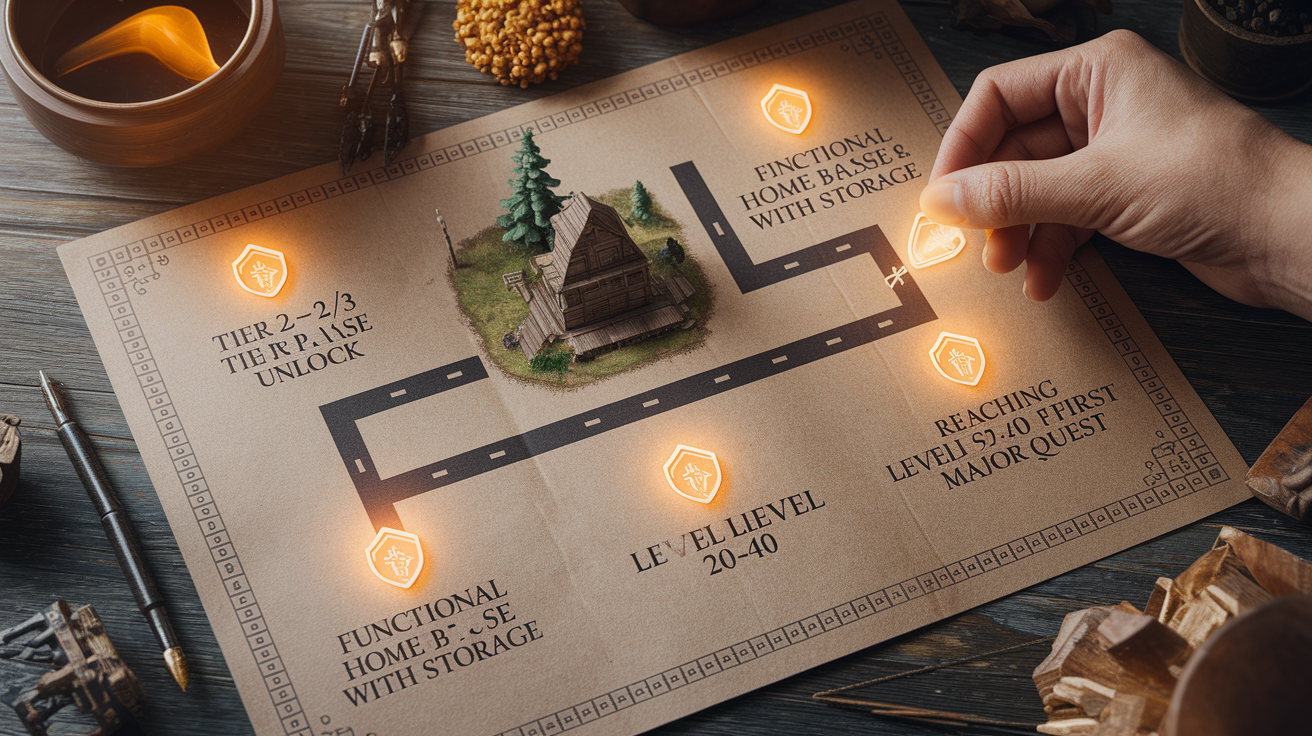
Milestones keep you from wandering. Without clear targets, you’ll drift between tasks, half finish projects, and hit the 12 hour mark with nothing major done. Define three to five hard checkpoints before you start. It converts scattered effort into real growth. Each one unlocks systems or capabilities that make the next one easier, and hitting all of them by the end of day one puts you ahead of most beginners who just react to whatever pops up.
First milestone: unlock tier two or tier three tools and gear within four to six hours. Starter tools are slow and break constantly. Upgraded tools increase yield by 15 to 35% per action and last longer between repairs. That difference compounds over hundreds of actions. A six hour grind becomes four hours. Craft or buy at least one upgraded weapon, one gathering tool, one piece of protective gear by the six hour mark.
Second milestone: establish a functional home base with storage, crafting access, and respawn before hour eight. This costs 50,000 to 200,000 currency or 200 to 500 units of wood and stone depending on the game. Finish it before hour eight or you’ll waste time running between scattered locations.
Third milestone: reach level 20 to 40 or complete the first major quest chain to unlock new zones, abilities, economic systems. Usually happens between hours eight and 16. It’s the gateway to mid game content.
These milestones remove early bottlenecks permanently. An upgraded tool keeps paying off in every gathering session. A home base centralizes everything and you don’t have to carry full inventory across the map. Hitting the level threshold opens better missions, stronger enemies with better loot, trade or crafting options that were gated. Players who hit all three by hour 16 enter the final eight hours with stable income, reliable gear, and access to profitable activities. Those who skip milestones spend the final hours still fixing basic problems.
Combat Readiness and Survival Fundamentals
New players die to avoidable stuff because they treat every fight the same and ignore the signals the game gives them. Early enemies telegraph attacks, patrol predictable routes, die quickly if you focus fire. But overconfidence leads to pulling multiple enemies, bad positioning, deaths that cost 10 to 30 minutes when you factor in respawn, gear recovery, lost inventory.
The biggest mistake? Engaging enemies before you understand combat mechanics. You’re learning attack patterns, dodge timing, cooldowns during a real fight instead of practicing on weak targets first.
How to stay alive in the first 24 hours:
- Check enemy level or threat markers before you engage. Red indicator, skull icon, five plus levels above you? Retreat. Come back later with better gear.
- Keep distance. Use cover or terrain to avoid damage. Standing in the open against ranged enemies or groups gets you killed.
- Put health items or healing abilities on quick access hotkeys. Use them before health drops below 30%, not during panic at 5% when your reaction time fails.
- Learn one reliable escape option. Sprint, dodge roll, teleport, mount. Keep enough stamina or cooldown to use it when a fight turns bad.
- Don’t fight in unfamiliar areas at night or during bad weather when visibility drops and enemies can ambush from off screen.
Early gear upgrades matter more than skill in the first 12 hours. Tier two armor lets you survive 40 to 60% more damage than starter rags. A tier three weapon kills enemies before they can hit back. Get one offensive upgrade and one defensive upgrade in the first six hours. Then add utility items like healing consumables or movement buffs.
Simple tactics work better than complex combos early. Focus fire one enemy at a time. Back away while reloading. Use terrain to break line of sight when you’re overwhelmed. Fighting smarter keeps deaths near zero and preserves the momentum you built during gathering and progression.
Efficient Time Management and Movement Strategies

Poor time management kills first day progress and you won’t even notice. Running back and forth between the same three spots six times wastes an hour on travel that could’ve been gathering, crafting, missions. Disorganized inventory forces mid mission trips back to storage because you left critical items behind. Starting tasks without checking what you need results in half finished projects that block other work. These don’t feel expensive in the moment. Over 24 hours they add up to three or four lost hours that could’ve funded an entire upgrade tier.
Route planning fixes most of this. Before you leave a safe zone, check what resources you need for the next three objectives. Plan a path that hits all relevant nodes in one loop instead of three trips. Mark high value locations on the map. Make a mental or written list of stops in geographic order.
If a mission needs you to turn in items at a central hub, combine the turn in with restocking, selling surplus goods, checking for new objectives. Every trip to town should accomplish four tasks instead of one.
Stay focused on high value tasks. Filter out distractions. Random encounters, low reward side missions, exploration detours are fine after you hit milestones. But they sabotage progress if they interrupt critical path work. The first 12 hours should follow strict priority: unlock tools, establish base, reach level threshold. Then relax into exploration or experimentation during the final 12 hours when the foundation’s secure.
Final Words
Hit the ground running: make quick early decisions, set your character, grab starter resources, and secure a safe spot within minutes.
Then focus your economy, chase the 24‑hour milestones, upgrade basic gear, and use route planning to cut wasted time. Watch for early mistakes like overspending or wandering into high‑level areas.
Use this [game] starter guide first 24 hours progression to prioritize the first hour and bounce back from setbacks. Small, smart steps add up—by the end of day one you’ll be in a much stronger place.
FAQ
Q: Why is the first hour of play important for long-term progression?
A: The first hour of play is crucial because early choices lock in resources, safety, and unlocks; securing shelter, food, and a milestone quickly creates a resource and time advantage that snowballs later.
Q: What should I set up during character creation and interface settings?
A: During character setup pick a starter build that matches your playstyle, enable helpful UI elements (hotkeys, map), and set control sensitivity so you won’t be struggling during combat or quick actions.
Q: What are the top actions to take in the opening hour?
A: The top opening-hour actions are: gather base resources, secure a safe spot, complete the tutorial quest, identify nearby threats, start basic crafting, place a simple shelter, unlock a core skill, and mark progression goals.
Q: Which resources should I prioritize first and why?
A: Prioritize wood (building), food (survival/healing), basic crafting materials (tools), stone/metal (structures), and currency (repairs/upgrades) because they keep you alive and enable your first upgrades and shelter.
Q: How much of each resource should I collect early on?
A: Collect enough to build a basic shelter, craft starter tools, and hold three to five meals plus a small upgrade buffer—enough to avoid fragile runs and let you focus on milestones, not constant grinding.
Q: What milestones should I aim to hit within 24 hours?
A: Aim to finish the tutorial, build a basic shelter or HQ, unlock the first crafting tier, gain one or two core skills, and reach the early level threshold that opens longer-term progression options.
Q: What common early-game mistakes should I avoid and how do I fix them?
A: Avoid overspending resources, entering high-risk zones, ignoring tutorials, and inefficient routes; fix by prioritizing essentials, scouting before fights, following tutorial steps, and mapping short farming loops.
Q: What core survival behaviors improve combat readiness early on?
A: Core survival behaviors are: keep moving and use cover, maintain situational awareness, avoid enemies that out-level you, manage health with food/heals, and know when to disengage and reset.
Q: When is it worth upgrading gear in the first day?
A: Upgrade gear when you’ve secured safety and a resource buffer; prioritize upgrades that address your immediate weaknesses (survivability or mobility) rather than chasing rare power for no reason.
Q: How should I manage time and movement to maximize progress in 24 hours?
A: Plan routes that chain objectives, avoid backtracking, group resource runs, use fast-travel or shortcuts when available, and focus on high-value tasks instead of chasing every loot node.