


Think you can wing cooldowns in Savage and still win? You can’t.
Endgame fights punish drift, wasted potions, and overlapping defensives.
This guide gives a simple pre-pull plan and a reusable two-minute cooldown rule so your opener, raidwide bursts, tank busters, and healer resources line up.
Read it to lock potion windows, set countdown macros, assign mitigation, and schedule healer charges.
No fluff – actions and the why: when to hold, when to burn, and how to recover if someone mistimes a major cooldown.
Core Endgame Raid Preparation for FFXIV: Building a Complete Pre‑Pull Plan

Server ticks happen every three seconds. That’s when DoTs pulse, HoTs tick, and most periodic effects update. Ground buffs stick around for five seconds after you leave them, so tanks can yank the boss and still grab that last buff tick. Snapshots work differently depending on what you’re casting. Castbar abilities lock in when the bar fills. Animation-based stuff snapshots during the animation. Instant abilities snapshot the moment you press them. Aggro snapshots at cast start, which means once a tank commits to pulling, the boss won’t swap targets halfway through.
You need your potion timing, buff order, and opener nailed down before the countdown ends. Most groups doing midcore or hardcore content pop potions at two minutes and six. Your pre-pull feeds directly into that first burst. Drift ten seconds and you might lose an entire usage before enrage. Countdown macros give everyone the same timer so casters can start their hardcast at exactly the right frame. Different jobs need different lead times. Casters might begin at minus two seconds so the spell lands on pull. Melee and tanks weave instants right as the timer hits zero.
Tanks confirm who’s pulling and which mitigation handles the opening autos. Healers check who’s shielding and who’s holding the panic button. DPS make sure their big hits land under the first wave of party buffs. FFXIV damage comes in types: Physical (piercing, slash, blunt), Magical, Darkness, and Gravity. Shields work against everything, including Gravity damage, which hits as a percentage of max HP and ignores most other reductions.
Required steps before you pull:
- Lock in potion windows so everyone knows when to chug and what to dump during the buff.
- Sync countdown macros to give casters casting room and instant jobs the right signal.
- Drop ground buffs early so the five-second linger covers the opener even if people move after pull.
- Assign opener cooldowns by role and confirm nobody’s sitting on a key ability past the first burst.
- Check mitigation for first autos and raidwide to avoid healer panic and wasted GCDs.
- Mark kill targets and positioning anchors so melee know where to stand and ranged know what to hit if adds spawn right away.
Final Fantasy XIV Offensive Cooldown Rotation Planning for Burst Windows
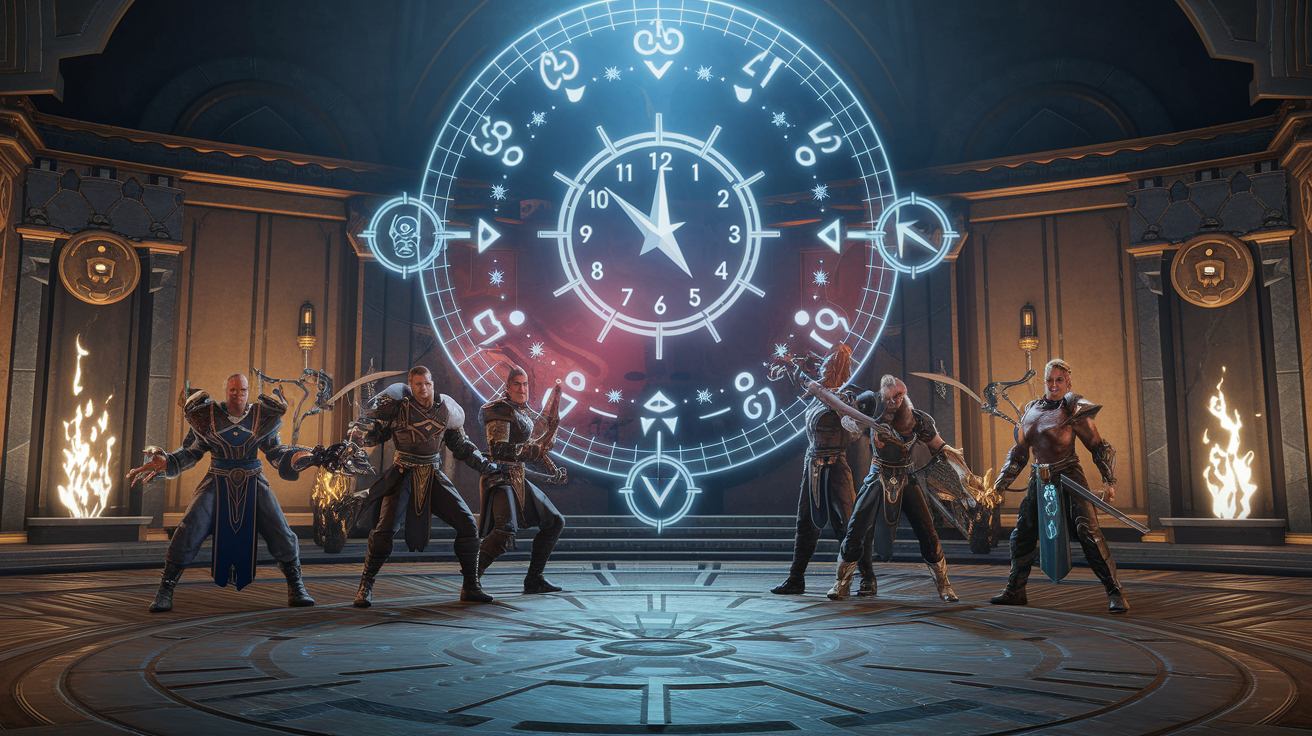
The two-minute cycle runs everything in endgame FFXIV. Jobs are built around 120-second cooldowns, and most raid buffs come back on that same clock. Your opener sets it up, the first real burst lands around one fifty to two minutes, then every two-minute window after that becomes a coordinated damage spike. Miss a burst alignment and you either make the group wait or you go solo and waste your cooldowns outside party buffs. Statics raiding two to three times a week for three to four hours drill burst timing until everyone moves together.
Drift happens. Small amounts are fine if they keep long-term sync intact. Holding a cooldown three extra seconds to stay aligned with the next party buff? Do it. The problem is cascading drift, where you delay once, then again, and by the fourth cycle your heaviest ability is fifteen seconds late and you’ve lost a full usage before enrage. Resource management plays into this too. Overcapping gauge forces early spending, but if the next raid buff is ten seconds out you can sometimes bank one finisher and burn the other to stop waste. Prep your motifs, charges, or procs during filler and cash them when every buff stacks.
| Cooldown | Ideal Timing | Notes |
|---|---|---|
| Party damage buffs (chain, divination, etc.) | Every 120 seconds, weaved around GCD 3 or 4 | Anchor for the whole group; never let these drift |
| Job burst abilities (big finishers, gauge dumps) | Land inside party buffs, usually GCD 5 to 8 | Front-load your highest potency; don’t spend right before forced movement |
| Potion / Tincture | Usually 2:00 and 6:00 in Savage timelines | Pop just before burst so the buff covers your heaviest GCDs and oGCDs |
| Medium cooldowns (60 to 90 seconds) | Use on cooldown if they align naturally; hold up to 10 seconds if next burst is close | Check if holding costs you a final usage before enrage |
| Add-phase burst | Coordinate whether adds die fast (use weak tools) or live long (stack buffs and nuke) | Blowing heavy cooldowns on adds that die in five seconds wastes them |
| Re-opener after downtime | Treat like a mini-opener; wait one or two GCDs for party buffs unless forced | Don’t dump everything instantly; sync with the group |
FFXIV Defensive Cooldown Scheduling for Tank Busters and Raidwides

Damage type decides which mitigation actually works. Physical comes in three flavors: piercing, slashing, blunt. Gets reduced by “physical damage down” abilities. Magical needs magic mitigation. Darkness is a special type that responds to “all damage” reductions but not pure physical or magic tools. Gravity damage hits as a percentage of your max HP and ignores most mitigation. Only shields help. When your main tank sees a magic buster castbar and pops a pure physical cooldown, it does nothing. Know the type ahead of time so you layer the right tools.
Snapshot rules mean you activate defensives early enough that they apply before the boss’s castbar or animation resolves. Press mitigation halfway through a buster cast and the snapshot already locked in. You eat full damage. Popping cooldowns early also gives healers time to top you after the hit. Press your stack five to eight seconds before impact so healers can weave a heal between GCDs without clipping. Wait till the last second and healers panic, blow multiple GCDs on you, wreck their DPS and their mana.
Stop overlap while keeping rotation intact. If both tanks pop their biggest cooldown on the same raidwide, one’s wasted and the next raidwide hits naked. Assign one tank to cover raidwide A, the other to cover B, and rotate. Use a spreadsheet or text doc listing every major damage event and which cooldown answers it. Revisit after each prog session because kill times improve and boss timelines shift. A fight that took nine minutes last week might end at seven fifty-five this week, changing whether you get a third usage of a six-minute cooldown.
Healer Raidwide Cooldown Planning and MP Management in Endgame Encounters

Healers juggle triage cooldowns, charge-based heals, and sustained throughput across long timelines. When a raidwide chunks the group for eighty percent health, you need a plan that doesn’t burn every cooldown and leave you dry fifteen seconds later. Triage means picking which damage events get expensive stacked mitigation and which get a single shield or regen. Charge abilities like Tetragrammaton or Earthly Star should line up with scripted damage, not random chip from avoidable mechanics. MP economy means don’t overheal before predictable windows. Waste mana topping people off and you can’t afford Raise spam when three DPS eat a mechanic.
Rez etiquette stops disasters. Multiple healers casting Raise on the same corpse burns thousands of mana and multiple GCDs. Call your Raise in voice or macro it. Swiftcast gives instant rezzes, but it’s also an emergency movement heal or a way to keep casting during heavy repositioning. Don’t reflexively burn it on the first death if the fight has a knockback ten seconds later that’ll force hardcasting while dodging.
Healer cooldown rules:
- Map every raidwide and multi-hit to a specific cooldown or pair so nothing catches you empty.
- Rotate charges and long cooldowns across multiple windows instead of stacking three on one raidwide and leaving the next naked.
- Keep at least one panic button for unplanned damage: missed mechanics, late swaps, early pushes.
- Track MP and use Lucid Dreaming at seventy to eighty percent instead of waiting till you’re empty and forced into triage with no resources.
- Check FFlogs after each session to find wasted healer GCDs, overhealing that could’ve been DPS casts, late mitigation that forced extra healing.
FFXIV Job Rotation and Off-GCD Integration for Endgame Groups

Every job has a different opener structure and timing, but they all share one limit: land your highest-potency stuff inside party buffs without clipping your GCD. Casters and ranged physical often weave their first party buff around GCD three or four because earlier slots go to instant procs or gauge builders. Melee might double-weave using an instant weaponskill, then return to standard combo. Tanks frequently use their first GCD to grab aggro, then weave Provoke or mitigation before committing to DPS rotation. Healers balance landing a damage spell on pull versus holding a preemptive shield, depending on whether the opener includes immediate raidwide.
Keeping a steady GCD pace while weaving essential oGCDs is the biggest execution challenge. Every job has a base GCD, usually two point five seconds, reduced by skill speed or spell speed. Weaving an oGCD between two GCDs is only safe if animation lock plus server lag doesn’t push your next GCD past its natural timing. Double-weaving (two oGCDs in one window) works cleanly after instants but clips your GCD if forced after a hardcast. Clip and your rotation drifts, your burst desyncs, and over seven minutes you lose entire usages. Fix it by using procs, instants, or fast GCDs to create clean weave windows. Single-weave when you have to.
Instant casts are your double-weave gates. When a job proc turns your next cast instant, or you pop Swiftcast, you get a full second of animation room to press two oGCDs without delay. Smart players bank instant procs for moments when multiple oGCDs come off cooldown together. Party buff, personal offensive, and potion all ready? Queue an instant GCD and weave all three. If your job has no natural instant, plan Swiftcast around high-value weave windows instead of burning it randomly.
| GCD Type | Weave Window | Priority |
|---|---|---|
| Hardcast (2.5s base) | Single weave only; double-weave clips and delays next GCD | Use for low-priority oGCDs or hold for an instant window |
| Instant proc or Swiftcast GCD | Clean double-weave with room for two oGCDs | Save these for stacking party buffs, potions, job burst |
| Fast GCD (sub-2.0s from skill speed) | Tight double-weave; only works with low latency and short animation oGCDs | Test on a dummy; if you clip even once, drop to single-weave |
| Post-slidecast movement GCD | Normal weave window once cast completes and you slidecast away | Slidecast doesn’t add weave time, but it lets you reposition without losing a slot |
Encounter Timeline Creation for FFXIV Cooldown Planning

Savage and Ultimate bosses follow scripts with fixed cast times and predictable transitions. Watch VODs, upload FFlogs, run the fight multiple times, and you can map every ability cast, raidwide, add spawn, and downtime window onto a second-by-second timeline. Castbar snapshots tell you the exact moment to commit a cooldown. Tank buster snapshots at the end of a three-second cast? Your mitigation must be active before second three. Movement mechanics like spreads, stacks, or forced repositioning disrupt rotation flow, so mark those and plan instants or gap closers to keep uptime.
Statics rely on multi-week prog to refine timelines. Week one you see phases one and two. Week two you hit phase three and find a new add wave. Week three the boss enrages at eight minutes and you realize your six-minute cooldown needs to fire at five fifty to squeeze a third cast before the fight ends. Ultimates push this harder with rigid multi-minute phases where one mistake twenty seconds in kills the attempt. Build a reusable timeline per fight so your group doesn’t reinvent cooldown assignments every night.
Steps to build a timeline:
- Record pull timer and first ability to set second zero.
- Log every raidwide, buster, add spawn with timestamps from multiple pulls to confirm consistency.
- Mark downtime, invuln phases, forced disconnects where DPS stops and cooldowns pause.
- Identify movement-heavy sequences that stop casting or push melee out of range, then note which jobs need instants or gap closers.
- Calculate enrage and total duration to see how many cooldown cycles fit and whether drift costs a final usage.
- Overlay party buff windows every 120 seconds and adjust personal timings to align.
- Export to a shared spreadsheet or visual tool so everyone can see their assignments and update as kill times improve.
Party Communication and Macros for Coordinated Cooldown Usage

Voice is standard in statics and essential for real-time callouts. Tank shouts “mitigating buster two” and the co-tank knows not to double-stack. Healer says “Raising DPS three” and the other healer cancels their cast, saves mana. Rez callouts alone prevent hundreds of wasted mana and multiple lost GCDs per night. For groups with limited voice or language barriers, macros fill the gap by auto-announcing actions in party chat: rez macros, countdown macros, LB macros, mitigation macros. All reduce overlap risk.
Latency pushes communication earlier. High-ping players must dodge before the cast bar finishes or animation plays because server lag means waiting for the visual guarantees a hit. Call mechanics five seconds early so lagged players have time to react. Tanks use voice to coordinate Provoke and Shirk for clean swaps: off-tank provokes, main shirks enmity to off-tank, main provokes back, off-tank shirks. Keeps aggro stable without awkward cooldown overlap.
Macro tips:
- Keep them short and clear: job icon, ability name, target when relevant. No walls of text or ASCII spam.
- Bind rez macros to a separate hotkey so you can choose silent raises when macros aren’t needed.
- Use countdown macros for pull timers with markers at 10, 5, 3, 0 so casters know when to start hardcasts.
- Disable sound in crowded content to stop noise spam, but keep it active in eight-player statics where audio helps.
Limit Break Timing and High-Impact Raid Utility Planning
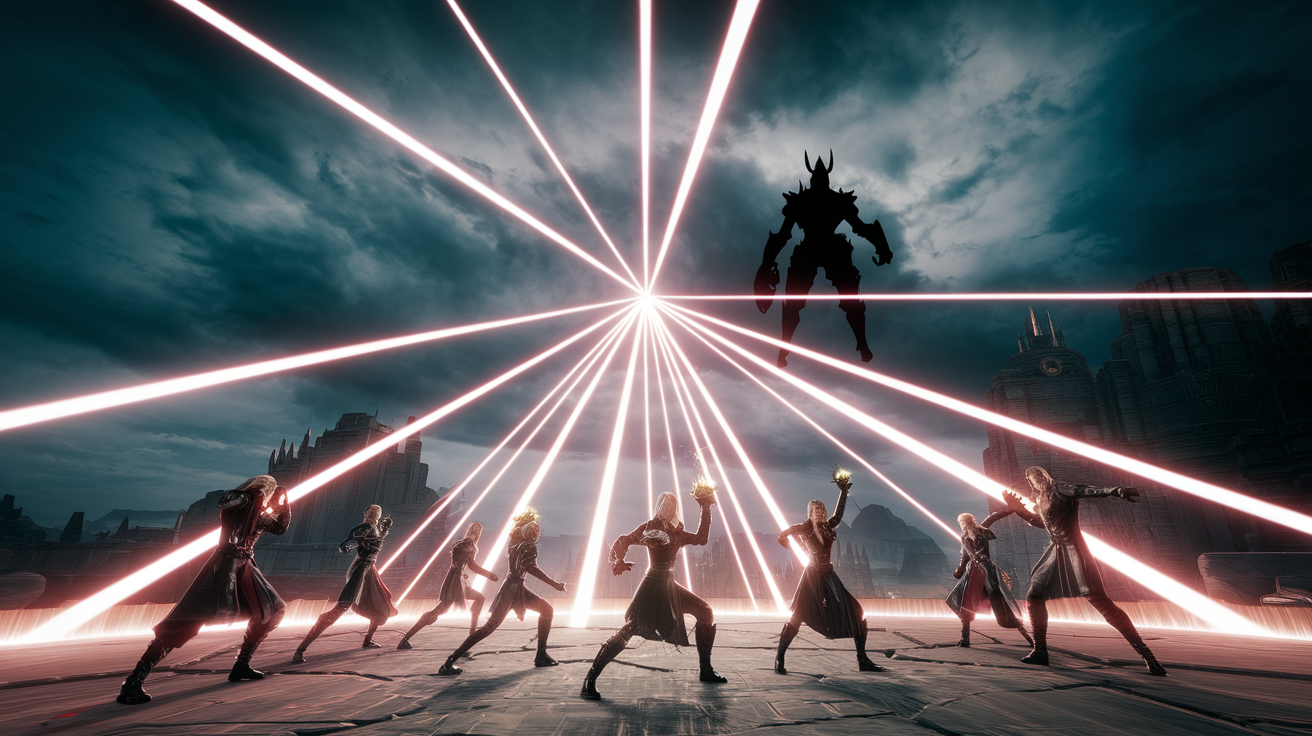
Limit Break is shared party resource that charges through combat and peaks at LB3 after several minutes. In Savage, LB3 timing often decides clear versus enrage wipe. Melee LB3 delivers massive single-target burst and is default when the boss has no adds. Caster LB3 handles add waves or multi-target burns. Healer LB3 rezzes the entire party with full HP and becomes a lifeline when three or more die to the same mechanic and normal raises can’t recover fast enough. Tank LB3 is niche but critical in Ultimates where scripted high-damage phases need invuln.
Staggered LB strategies show up in fights with multiple add waves or two burn windows. Adds spawn at three minutes and again at six? LB1 the first wave to save resources, LB3 the second for a clean finish. Prog groups hitting enrage at ninety-five percent boss HP can hold melee LB3 for the final thirty seconds to bridge the DPS gap and secure the kill. Blowing LB early on trash damage or a single low-priority add often costs the fight because you won’t have LB3 when it matters.
Sustained damage phases need careful cooldown economy because you can’t front-load everything into one burst then coast. Phase lasts two minutes with constant moderate damage and no downtime? Rotate mitigation and healing in waves. First healer uses their big ability, second covers the next spike, tanks rotate defensives, and by the time you loop back the first healer’s cooldown is up again. LB fits into this. If the phase ends with a heavy raidwide and your healers are taxed, healer LB2 can reset things and let DPS healers return to damage casts instead of spamming emergency heals.
FFXIV Cooldown Adjustments for Movement-Heavy, Multi-Phase, or Add-Centric Fights

Slidecasting keeps uptime when mechanics force repositioning. Start moving the instant before your cast bar fills (usually the last tenth of a second) and the spell completes while you’re already running. Turns a two-and-a-half-second root into two point four and lets you dodge ground AoEs, stack, or spread without losing a GCD. Good slidecast timing feels invisible. Fail it once and you either cancel the cast (waste the GCD) or finish the cast, stand still, and eat the mechanic.
Swiftcast and Surecast are emergency mobility tools with different uses. Swiftcast makes your next cast instant and is best saved for high-movement sequences where slidecasting isn’t enough: multiple dodges in a row, or running across the arena while keeping DPS up. Burn it on a low-value filler when there’s no movement and you’ve wasted it. Then the knockback arrives ten seconds later and you’re stuck hardcasting, losing uptime. Surecast prevents knockbacks and draw-ins, letting you ignore certain mechanics and keep casting in place. Boss does a centered knockback every sixty seconds? Plan Surecast for those and slidecast everything else.
Add phases need staggered cooldowns, not a single all-in burst. Three packs spawn at intervals (two minutes, four, six). Use all your AoE cooldowns on pack one and you’re left with weak filler on packs two and three. Rotate instead. Medium AoE on pack one, heavy on pack two when party buffs are up, LB or final cooldown on pack three. Downtime between packs disrupts your two-minute cycle, so treat each add wave like a mini re-opener and sync with party buffs instead of autopilot.
| Mechanic | Adjustment | Notes |
|---|---|---|
| Forced spread or stack with constant movement | Bank instant procs or use Swiftcast to keep casting during repositioning | Slidecast as much as possible; save Swift for sequences where you must run more than one GCD’s worth |
| Knockback or draw-in | Use Surecast to ignore it and keep casting in place | Plan Surecast in your opener so it’s up for scripted knockbacks; don’t waste on random damage |
| Add waves or multi-target burns | Stagger AoE cooldowns across waves; hold at least one for party-buffed windows | If adds die in under fifteen seconds, use weak filler and save heavy for longer-lived packs |
| Boss downtime or invuln phases | Pause rotation and treat return as re-opener; wait one or two GCDs for party buffs unless forced | Don’t dump cooldowns during downtime; they’ll come off while you can’t hit anything and desync your cycle |
Log Review and Performance Analysis to Refine Cooldown Timing

FFlogs color tiers rank your performance by percentile. Gold sits ninety-fifth or higher, purple seventy-fifth to ninety-fifth, blue fiftieth to seventy-fifth, green twenty-fifth to fiftieth, grey below twenty-fifth. The color matters less than the patterns. If your biggest attacks land outside party buffs, your rotation drifted. If your healer GCDs are fifty percent healing, you’re either overhealing or your group is eating avoidable mechanics. If your mitigation shows up five seconds after a buster snapshot, you’re pressing too late.
VODs show what logs can’t: positioning mistakes, late movement, failed slidecasts, communication gaps. Watch your own POV first to catch obvious errors, then watch another role’s POV to see how their cooldowns sync with yours. You’re DPS and notice the tank using their biggest mitigation while you’re forced off the boss for a mechanic? Suggest swapping mitigation to a different raidwide so you can keep hitting. Statics that review logs individually and discuss findings calmly improve faster than groups that ignore logs or use them for shame.
What to check:
- Buff sync: confirm your heaviest GCDs and oGCDs landed while party buffs were active, not five seconds before or after.
- Drift tracking: compare cooldown timestamps across pulls to see if abilities are sliding later each cycle.
- Healer GCD breakdown: healing GCDs should be the minority unless the fight is crazy healing-intensive; too many means avoidable damage or bad mitigation.
- Mitigation placement: verify tank and healer mitigation appeared before damage snapshots, not after the hit registered.
- Wasted oGCDs: look for cooldowns used during downtime, double-stacked mitigation with no benefit, buffs popped right before forced disconnects where nobody could attack.
Final Words
in the action, we ran a tight checklist: nail server-tick snapshots, set pre-pull buffs and potions, then sync offensive bursts and defensives.
Set a simple rule: potions at 2:00, land major GCDs under raid buffs, stagger healer raidwides, and mark mitigations. Use VODs and logs to iterate.
Practice this loop – pre-pull checklist, 120s burst cycles, defensive timing – then review logs to tighten execution. Final Fantasy XIV raid prep and cooldown rotation planning for endgame groups gets easier with rehearsed routines. Keep practicing; you’ll see cleaner runs and fewer wipes.
FAQ
Q: What is a pre-pull plan and why is it important?
A: A pre-pull plan is a timed checklist of buffs, potions, and positioning before engage; it prevents wasted cooldowns, secures opener alignment, and maximizes first-burst uptime for consistent raid DPS and safety.
Q: How do server ticks, snapshots, and cast timings affect pre-pull actions?
A: Server ticks and snapshot rules dictate when buffs and aggro register, so time ground buffs and cast starts around the 3-second tick and cast begins to ensure snapshots capture the correct stats.
Q: When should potions and tinctures be used in raids?
A: Potions and tinctures are commonly used at 2:00 and 6:00 for major two-minute windows; align them with your first full burst around 1:50–2:00 to get maximum uptime under raid buffs.
Q: What are the required pre-pull steps everyone must complete?
A: Required pre-pull steps include potions ready, synchronized countdown, ground buffs placed, opener abilities queued, mitigation assignments checked, and targets marked so the raid starts clean and aligned.
Q: How should offensive cooldowns be scheduled around the two-minute cycle?
A: Offensive cooldowns should align with the 120s cycle: opener → first full burst near 2:00, then repeat, ensuring major GCDs land under raid buffs and potion windows for best throughput.
Q: What drift is acceptable and how do you prevent cooldown desync?
A: Small drift to maintain alignment is acceptable; prevent desync by holding resources, avoiding last-second buffs before forced movement, and tracking previous window timing to readjust next burst.
Q: How do tanks and healers schedule defensive cooldowns for tank busters and raidwides?
A: Tanks and healers schedule defensives to cover tank busters proactively, choosing mitigation suited to damage type, timing early enough for post-hit topping, and avoiding overlapping cooldowns for steady coverage.
Q: How should healers plan raidwides and manage MP across long fights?
A: Healers plan raidwides to match scripted spikes, conserve MP by avoiding pre-spike overheal, reserve Swiftcast for emergencies, and stagger charge heals to keep throughput without burnouts.
Q: How do I integrate off‑GCDs without clipping GCDs or ruining burst windows?
A: Integrate oGCDs during allowable weave windows and instant-cast moments, avoid double-weave clipping, and use slidecasting or planned double-weaves in opener windows to preserve GCD rhythm and burst alignment.
Q: How do you build an encounter timeline for cooldown planning?
A: Build encounter timelines by mapping boss casts, add waves, movement downtime, and enrage; use VODs and logs to mark predictable spikes, then place cooldowns and callouts accordingly for repeatable windows.
Q: What macros and communication help coordinate cooldown usage with minimal voice comms?
A: Use countdown macros, clear text callouts, and role-specific macros for tank swaps and resses; map major cooldowns to raid markers and short messages to reduce mistakes without heavy voice reliance.
Q: When should the Limit Break be used and how do you plan it?
A: Limit Break should be planned for enrage windows, clutch add kills, or healer LB3 resses; set clear LB rules before pulls and hold or stagger LB to avoid wasting it on low-impact phases.
Q: How should cooldowns be adjusted for movement-heavy or add-centric fights?
A: Adjust cooldowns by reserving Swiftcast and slidecasting for movement windows, staggering offensive bursts during adds, and using Surecast for unavoidable knockbacks to keep uptime steady.
Q: How can log review refine cooldown timing after a raid night?
A: Log review refines cooldown timing by checking buff sync, drift, healer GCDs, mitigation placement, and wasted oGCDs, then updating timelines and practice VODs to fix repeated timing errors.