


Think jungling is just following a cookie-cutter clear? Think again.
Your first four minutes decide whether you hit power spikes or hand the enemy tempo.
This guide shows exactly how to jungle path and counter clear enemy meta junglers, how to read starts, time Scuttle, and steal camps safely so you hit spikes faster, deny their gold, and set up objective control.
I’ll give clear routes, simple decision rules for when to invade or back off, and fixes for the mistakes that cost you the early game.
Core Principles for Optimal Jungle Pathing and Counter-Clearing

Your jungle path determines the first four minutes of the game. Every camp you take locks in a sequence of level spikes, gank windows, and objective timings. The enemy jungler’s running the same puzzle from the opposite side of the map. Optimal pathing means you hit your power spikes faster, show up to objectives with tempo advantage, and deny enemy camps before they can be converted into pressure. Counter-clearing is stealing enemy camps to cripple their gold, experience, and information while you gain all three.
Modern jungle strategy revolves around three core mechanics: tempo, tracking, and camp respawn timers. Tempo is your ability to be in the right place at the right time, ahead in levels or gold. Tracking is reading where the enemy jungler started, where they are now, and where they’ll rotate next. Camp respawn timers are the hidden clock that governs jungle pressure. Each camp respawns 100 seconds after being cleared. If you steal an enemy camp, they lose that camp for the next 100 seconds and you know they can’t be farming that quadrant during that window.
The gap between average and strong junglers is decision speed. You’ve got roughly 10 to 15 seconds between camps to decide your next move. That decision is built on:
Lane priority. Which lanes can move first to help or collapse.
Enemy jungler location. Confirmed or inferred from leashes, timers, or vision.
Your champion’s win condition. Early duel power, level 6 spike, or fast-clear scaling.
Objective spawn timers. Scuttle at 3:30, Dragon at 5:00, Herald at 8:00.
Vision coverage. Whether you or the enemy has deep wards showing quadrant control.
Counter-clearing works when you combine all five. If you know where the enemy is, your lanes have priority, and you can clear faster or escape safely, you invade. If any piece is missing, you default to your own safe route and wait for the next window.
Understanding Meta Jungler Archetypes and Their Preferred Routes

Meta junglers fall into four archetypes based on clear speed, gank timing, and scaling needs. Early pressure junglers like Lee Sin, Elise, and Jarvan IV want to hit level 3 by 2:45 and force a gank or invade before 3:15. They typically run three-camp or five-camp clears to accelerate their first play. If you’re against one of these, expect them to skip Krugs, finish their second buff around 2:30, and look for Scuttle or a gank immediately after.
Fast-clear scaling junglers like Graves, Udyr, and Karthus prioritize six-camp full clears to reach level 4 and maintain high CS per minute. They avoid early fights unless the enemy walks into them. These champions out-tempo you by farming faster, not by fighting earlier. If you invade them, they’ll often give up one camp and rotate to take two of yours. Counter-clearing a fast-clear jungler requires lane priority and the ability to match or exceed their clear speed.
Assassin and level 6 spike junglers like Evelynn, Kha’Zix, Nocturne, and Rengar run full clears to rush level 6 as fast as possible. They avoid early Scuttle fights and ignore gank opportunities that delay their ultimate timing. Once they hit 6, their kill pressure spikes hard. Against these champions, your best counter-clear window is pre-6. Force them to respond to invades or objective contests before they unlock their power spike.
Hybrid junglers like Viego, Xin Zhao, and Volibear can flex between early aggression and farming depending on matchup and lane states. Viego often runs a four-camp clear into Scuttle, then decides whether to gank or keep farming. Xin Zhao can run three-camp into early invade or five-camp into contested Scuttle. These junglers adapt their route mid-clear based on information, so tracking them requires reading their behavior after the first buff, not just their starting side.
Crafting Your Own Optimal First Clear Routes
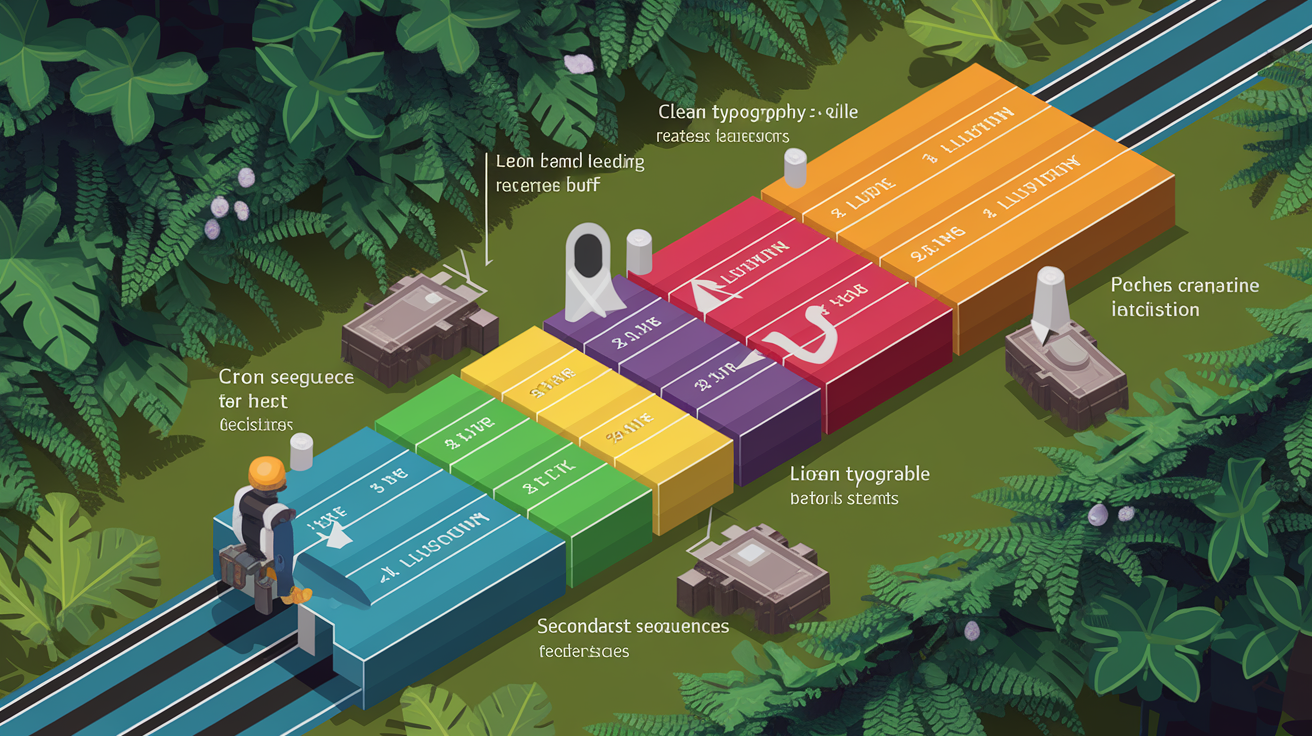
Your first clear should be built backward from your first decision point. Most junglers make their first real decision after four camps, around level 3, between 2:45 and 3:15. That decision is: gank, invade, contest Scuttle, or keep farming. Your route should put you in position to execute whichever option your champion does best while denying the enemy theirs.
Check which side your bot lane is leashing. If your bot lane arrives late or at lower health, the enemy jungler started bottom side. That tells you their first buff and likely quadrant. If you’re playing a duelist like Xin Zhao or Volibear and the enemy started bot-side red, you can path toward their top-side blue around 2:45 and contest or steal it when they rotate up. If you’re playing a farmer like Karthus and the enemy is Lee Sin, you start opposite side and avoid them entirely until you out-scale.
Standard efficient first clear structure follows this sequence:
Start at the buff your bot lane can leash (usually red on red side, blue on blue side). Clear toward your second buff using the fastest camp sequence for your champion (some skip Krugs, others full clear). Arrive at your second buff between 2:15 and 2:30 depending on clear speed.
After your second buff, you’re level 3. From here, the path splits based on champion type. Early duelists look for invades or ganks. Farmers add one or two more camps to reach level 4, then back or move to Scuttle. Assassins keep clearing to rush 6.
Avoid downtime. Downtime is any moment you’re walking without a camp, gank, or objective in sight. If you finish red buff and the nearest camp is 8 seconds away but Scuttle spawns in 15 seconds, don’t walk to Scuttle early. Clear the camp, then rotate. Tempo comes from seconds saved between camps, not from flashy invades.
Tracking the Enemy Jungler Through Map States

Tracking starts at 1:25 when laners move to leash. Watch which side the enemy bot lane walks toward. If they’re late to lane or missing, the enemy jungler started that side. If both bot lanes appear on the map before minions spawn, the enemy jungler either started topside, took no leash, or invaded your jungle at level 1. Most junglers take a leash, so default to topside start unless you see otherwise.
Lane health bars and push states are the second tracking layer. If the enemy top laner recalls with low health and no gank happened, the enemy jungler didn’t path topside early. If your mid laner is shoved in and pings enemy missing at 2:50, the enemy jungler is likely nearby setting up a gank. Pushed lanes attract junglers. Shoved lanes with no priority are free gank targets. Read lane states to predict rotation probability.
Four signals confirm or narrow enemy jungler location:
Buff timer and leash. Tells you their starting quadrant and first rotation direction (most junglers path toward their second buff after 3 to 4 camps).
Scuttle Crab timing. Scuttle spawns at 3:30. Many junglers finish their first clear and rotate to Scuttle between 3:15 and 3:45. If Scuttle is missing, the enemy was recently in that river.
Lane gank attempts or visibility. Any time the enemy jungler shows on the map, you know they’re not in the opposite quadrant for at least 20 to 30 seconds (the walk time across the map).
Plant and camp debris. Jungle plants leave debris for roughly 30 seconds after being used. Seeing fresh Blast Cone debris near raptors means someone was there within the last half-minute.
Combine these signals with camp respawn timers. If you invade and steal the enemy’s blue buff at 2:40, that buff will not respawn until 4:20. You know the enemy jungler cannot be farming blue-side jungle during that window. Use that information to predict where they’ll path next, usually toward their other quadrant or toward lanes.
Counter-Jungling Routes and When to Invade Safely
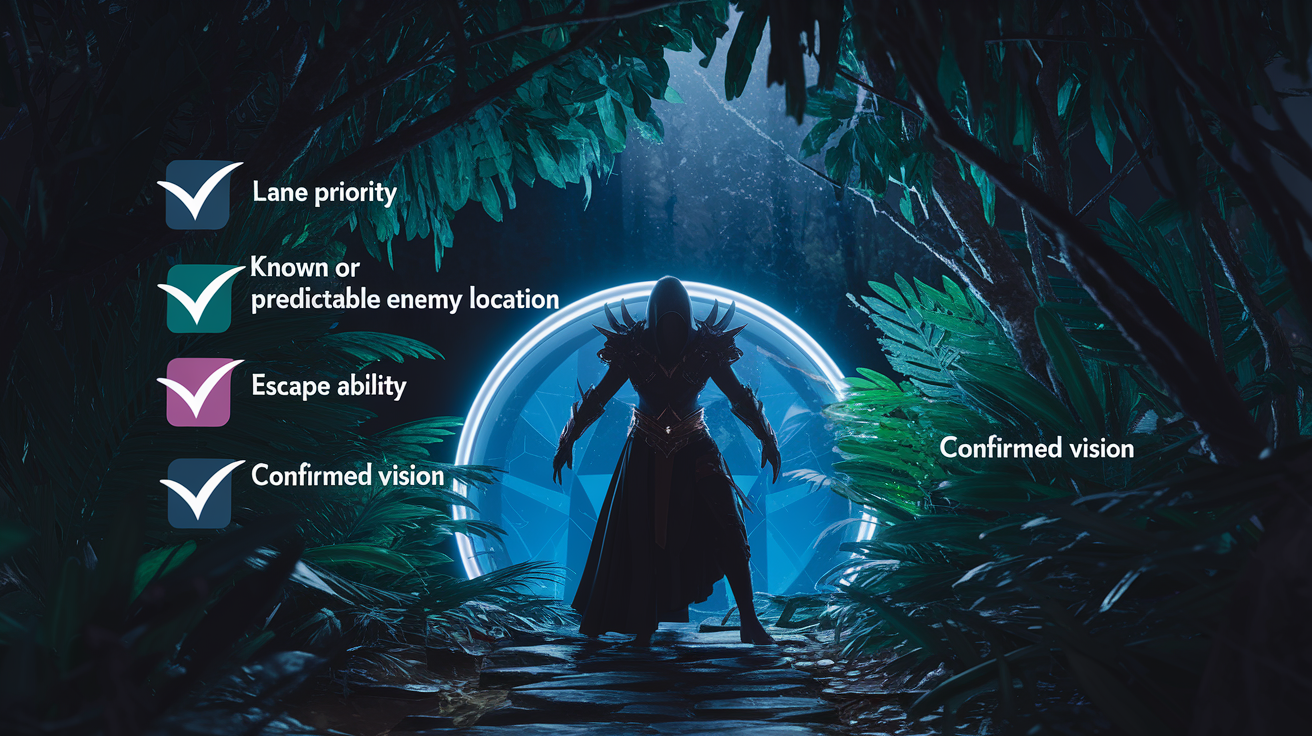
Counter-jungling is stealing enemy camps to deny gold, experience, and map pressure while gaining all three yourself. The highest-value invades target buffs because they provide the largest chunk of experience and gold, and denying a buff cripples enemy clear speed and dueling power. Secondary targets are Gromp and Raptors (high experience camps). Krugs and Wolves are low priority unless you’re already deep and can take them for free.
Safe invades require four conditions to be true simultaneously:
Lane priority on the nearest lane. Your laner can move first and collapse to help if the enemy jungler or their laner rotates. If your mid is shoved under tower, don’t invade enemy raptors.
Enemy jungler location is known or predictable. You saw them gank bot, they just recalled, or their camps are on timers that place them on the opposite side of the map.
Your champion can escape or 1v1. High mobility champions like Lee Sin, Nidalee, and Graves can invade and escape even if collapsed on. Low mobility farmers like Amumu or Zac need guaranteed safety.
Vision or information confirms no collapse. You have a ward showing the enemy mid or top hasn’t rotated, or you can see them on the map farming their lane.
If all four are true, invade. If even one is missing, the risk is too high. A failed invade costs you the time walking in, the camps you didn’t clear on your own side, and potentially your life if you’re collapsed on. That’s a 30 second to 1 minute tempo loss that can lose the entire early game.
The most common high-value invade route: enemy shows bot at 3:00, you’re top-side, you path into their top-side jungle and steal blue buff or Gromp. Ping your top laner for priority. If the enemy jungler rotates up, your top laner moves first and you escape or turn it into a 2v1. If no one rotates, you take the camp for free, deny it for 100 seconds, and know the enemy can’t be top-side until after 4:40.
Invading isn’t about fighting the enemy jungler. It’s about taking camps they can’t contest and forcing them to react. If the enemy has to walk toward you, they’re not ganking. If they give up the camp, you’re ahead. Either outcome is a win.
Adaptation Paths Against Fast-Clear Meta Junglers
Fast-clear junglers like Graves, Udyr, Karthus, and Lillia out-tempo you by clearing all six camps faster than you can clear four. They reach level 4 while you’re level 3, and they maintain higher CS and gold throughout the game. You can’t out-farm them. Your adaptation has to come from forcing plays they don’t want or stealing camps while they’re committed elsewhere.
The counter-clear strategy against fast-clearers is vertical jungling. Vertical jungling means you clear one side of the map (your bottom jungle, for example) and then rotate to the opposite side of the enemy jungle (their bottom jungle) and clear it before they can. This works because fast-clearers path predictably. If they start red and full clear, they’ll be top-side around 3:00. You mirror them and take their bottom-side camps while they’re far away. By the time they rotate back, those camps are gone and you’re already resetting or moving to an objective.
Vertical jungling only works if your laners have priority and the enemy can’t collapse on you. If the enemy bot lane can rotate first, you’ll get collapsed on and lose the 2v1. Ping your laners before you invade and make sure they understand you need them to move if the enemy shows up. If they can’t, don’t invade. Default to your own safe route and wait for a better window.
The other adaptation is forcing early fights. Fast-clearers are often weak duelists before their first item. Graves is strong, but Karthus and Lillia are not. If you’re playing Xin Zhao, Lee Sin, or Elise, you can invade them at their second buff around 2:30 and force a 1v1. Even if you don’t kill them, forcing them to recall or give up camps breaks their tempo and evens the game state.
Playing Against Early-Gank Pressure Champions
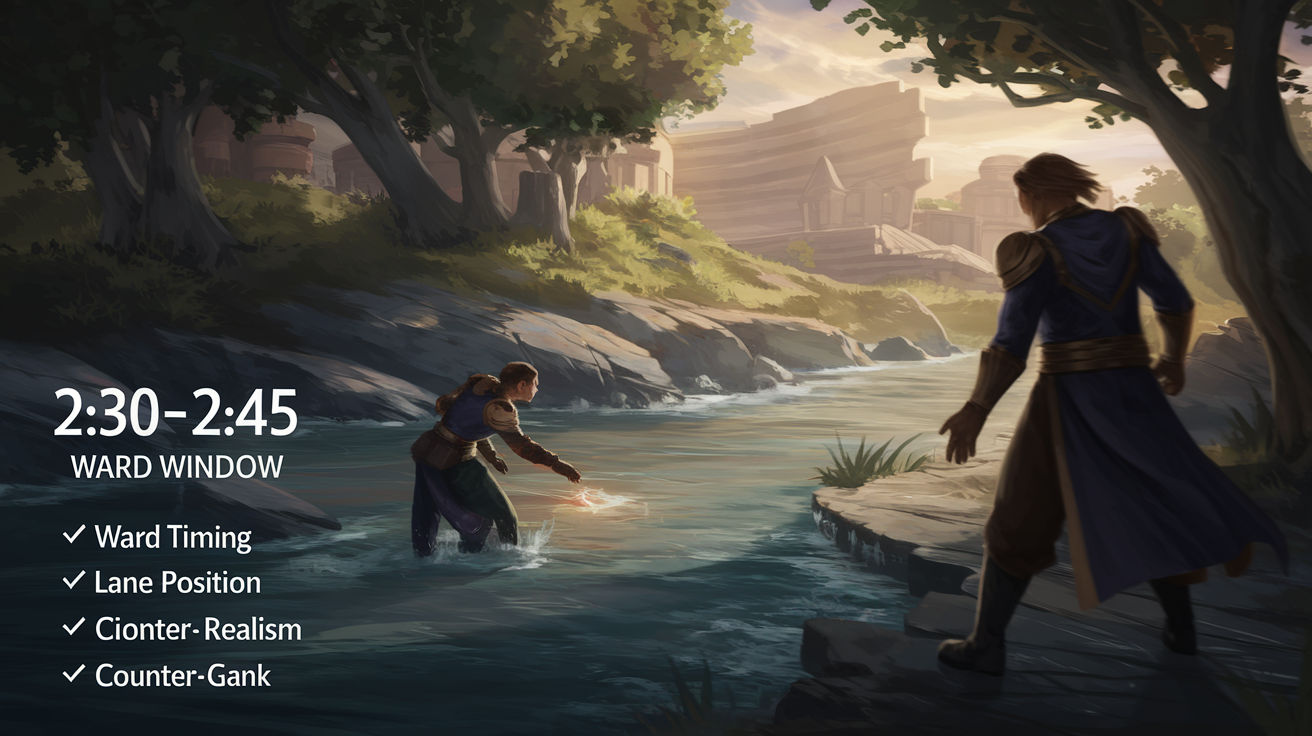
Early gank junglers like Lee Sin, Jarvan IV, Elise, and Xin Zhao want to hit level 3 by 2:45 and force a play before 3:15. They’re gambling that one successful gank will snowball a lane hard enough to compensate for lower farm. Your goal is to make that gamble fail by pathing defensively, warding predictably, and denying gank angles.
The simplest counter-path is mirroring. If the enemy is Lee Sin and started red bot-side, you know he’ll likely path red into raptors or red into blue into Gromp, then look for a gank top or mid around 2:50. You start opposite side (blue top-side), clear toward bot, and position to counter-gank or cover the opposite side of the map. When Lee shows top, you’re free to gank bot or take Dragon-side Scuttle uncontested.
Three defensive measures drastically reduce early gank success:
Lane wards at 2:30 to 2:45. Drop a trinket ward in the river brush or jungle entrance around 2:30. This is the window most early-gank junglers arrive. Seeing them early lets your laner back off and denies the gank.
Lane position and wave control. Laners who push blindly before 3:00 are free kills. If your laner is shoved and has no vision, ping them back. A failed gank is worth more than three CS.
Counter-gank positioning. Hover near the lane most likely to be ganked. If your mid is pushed and low, stay nearby. If the enemy ganks and you’re close, you turn it into a 2v2 or 3v3 and often win because you’re healthy and they used cooldowns on the gank.
If the enemy jungler fails their first gank, they’re behind. They walked across the map, burned 20 seconds, and got nothing. You spent that time farming and now you’re up in CS and experience. After a failed gank, the enemy will usually default to farming or try to force Scuttle. Be ready to contest Scuttle with lane priority or steal their camps while they’re walking back.
Vision Strategies for Jungle Pathing and Counter-Clearing

Vision controls information, and information controls jungle pathing. The jungler who knows where the enemy is can invade, counter-gank, and secure objectives safely. The jungler who plays blind is always one step behind. Your trinket ward and Control Wards are limited, so ward placement has to be deliberate and high-value.
Deep wards are wards placed inside the enemy jungle rather than in river or lane brushes. The highest-value deep ward positions are pixel brush (the tiny brush near red buff), the brush between raptors and mid lane, and the brush near blue buff. These spots reveal enemy jungle pathing and give you 8 to 12 seconds of advance warning when the enemy rotates toward a lane or objective. Place deep wards after you’ve pushed a lane and have priority, or after you’ve invaded and secured a camp. Walking into enemy jungle blind to place a ward is how you die for 75 gold.
River wards are lower value but safer. Placing a trinket in the river brush near Scuttle or Dragon gives vision of rotations without requiring you to invade. Use river wards early (before 3:30) when you don’t have lane priority and can’t safely deep ward. Upgrade to deep wards once you have tempo or your laners can cover you.
Control Wards should be placed in high-traffic areas you want to control long-term. The most common spots are the river bush near Dragon or Baron, the jungle entrance near red or blue buff, or the tri-brush. A Control Ward in the river near Dragon denies enemy vision for objective setups and forces them to facecheck or give up vision control. Don’t place Control Wards in lane brushes unless you’re setting up a specific play. Jungle Control Wards last longer and provide more value.
Objective Sequencing and Pathing Around Dragon/Herald
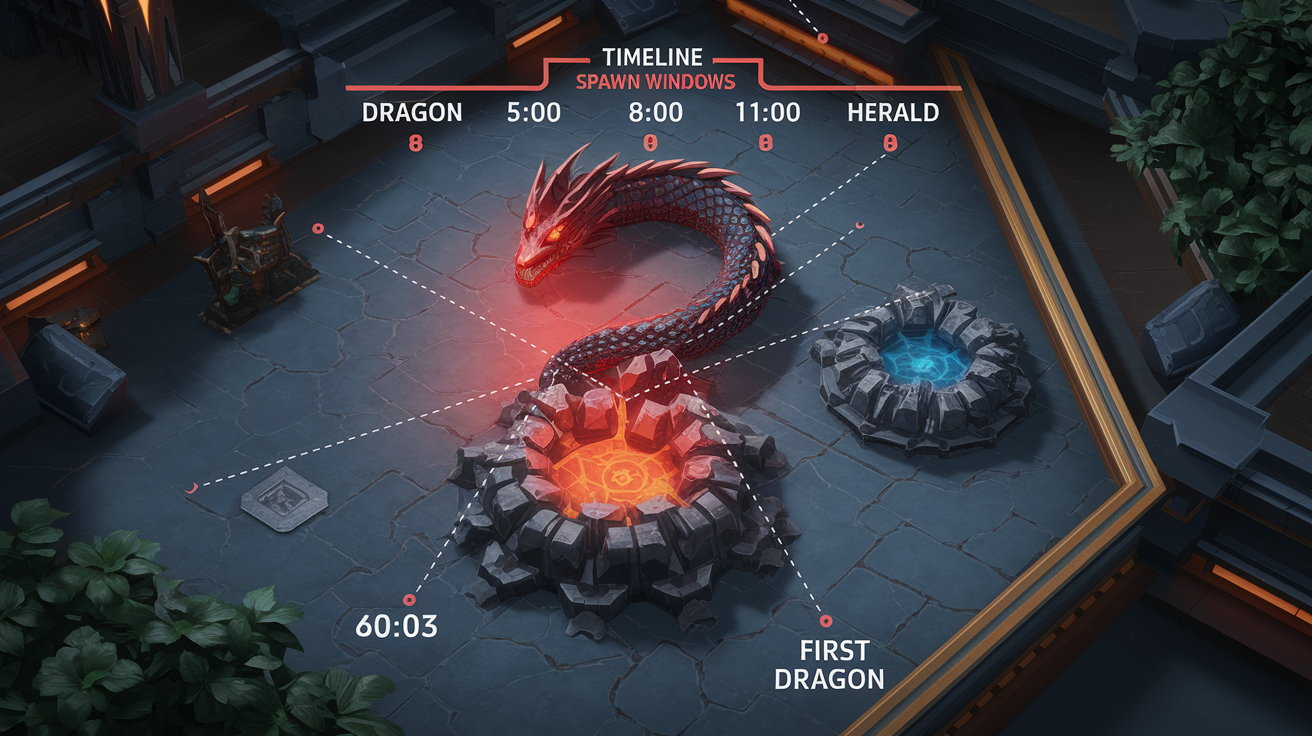
Objective timers dictate jungle pathing from 5:00 onward. Dragon spawns at 5:00, Herald spawns at 8:00, and both respawn on predictable timers after being taken. Your jungle route should converge on the objective 20 to 30 seconds before it spawns so you can secure it with lane priority or contest if the enemy tries to take it. Pathing away from an objective right before it spawns is a common low-level mistake that gives the enemy a free Dragon or Herald.
The ideal setup is clearing the jungle quadrant nearest the objective, then rotating to the objective with full health and smite available. For Dragon, that means clearing bot-side jungle (red, Krugs, raptors) between 4:00 and 4:45, then moving to Dragon pit at 4:50. For Herald, clear top-side jungle (blue, Gromp, wolves) between 7:15 and 7:45, then rotate to Herald pit at 7:50. If your smite is down or you’re low on health, you lose most objective contests by default.
| Objective | Ideal Timer | Prerequisite Conditions |
|---|---|---|
| First Dragon | 5:00 – 5:30 | Bot lane priority, smite available, jungle quadrant cleared by 4:45 |
| Rift Herald | 8:00 – 8:30 | Top or mid priority, smite available, top-side jungle cleared by 7:45 |
| Second Dragon | 11:00 – 11:30 | Bot priority, vision control in river and jungle, team positioned nearby |
Lane priority is the single most important prerequisite. Priority means your laners can move to the objective first. If the enemy bot lane has priority and yours is shoved under tower, don’t try to solo Dragon. You’ll get collapsed on and die or have to give it up. Ping your laners to push and rotate 30 seconds before the objective spawns. If they can’t, skip the objective and path to the opposite side of the map to take camps or pressure a different lane.
Mid-Game Path Adjustments Based on Game State
Mid-game starts when the first tower falls, usually between 8:00 and 12:00. Lane assignments break down, players start roaming, and jungle pathing shifts from predictable routes to reactive decision-making. You can’t path the same way every game. You have to read the current game state and adjust.
If your team is ahead, your pathing should create pressure and deny enemy resources. Clear your jungle, then invade the enemy jungle and take their camps while your laners push waves and threaten towers. An ahead jungler with lane priority can live in the enemy jungle and choke out the enemy team’s gold and experience income. If the enemy tries to contest, your laners collapse first and you win the fight. This is how you close out games that are already winning.
If your team is behind, your pathing has to be defensive and opportunistic. Stick to your own jungle, cover your losing lanes, and wait for the enemy to make a mistake. Don’t invade when you’re behind unless you have specific information that guarantees safety. Instead, clear your camps, ward your own jungle entrances, and look for picks on isolated enemies. One good pick when you’re behind can swing the game because it opens a window to take an objective or push a lane while the enemy is down a player.
Vision denial becomes critical in mid-game. Sweep common ward spots with your Sweeper before taking objectives, and place Control Wards to secure areas you want to control. If you’re setting up for Dragon, clear enemy wards in the pit and river, then place your own. If you’re behind and can’t contest, place defensive wards at your jungle entrances so you see invades coming and can rotate away safely.
Counter-Clearing High-Tempo Assassins and Burst Junglers
Assassin junglers like Evelynn, Kha’Zix, Rengar, and Shaco rely on fog-of-war pressure and isolated kills. They avoid fair fights and look for picks on players who facecheck brushes, overextend, or walk through unwarded jungle. Counter-clearing them is less about stealing camps and more about controlling vision and denying isolation opportunities.
The primary counter to assassins is vision triangulation. Place wards at three points around the area you want to control: one at the jungle entrance, one in the river, and one deep in the enemy jungle. This creates a triangle of vision that reveals enemy movement from multiple angles and makes it nearly impossible for the assassin to sneak in undetected. If they try to enter your jungle, you see them early and rotate away or collapse with your team.
Four defensive counterplay tactics reduce assassin effectiveness:
Group with at least one other player when moving through unwarded areas. Assassins can’t kill two healthy targets. Isolation is their win condition. Deny it.
Sweep and Control Ward high-traffic areas. Assassins rely on vision denial to create fear and pressure. If you have vision, they lose most of their threat.
Path toward your laners, not into empty jungle. If Evelynn is missing, don’t walk alone into your own jungle to clear raptors. Path toward mid or bot where your team can collapse if she shows.
Track ultimate cooldowns. Most assassins rely on their ultimate to secure kills. If Rengar used ultimate 45 seconds ago, you have a window to move aggressively before it’s back up.
Counter-clearing an assassin means taking their camps when you know they’re on the opposite side of the map or after they’ve committed to a gank. If Kha’Zix ganks top and doesn’t get a kill, he’s low on health and burned cooldowns. That’s your window to invade his bot-side jungle and take raptors or red buff. He can’t contest because he’s not healthy enough to 1v1, and you take his camps for free.
Advanced Jungle Decision-Making Scenarios
High-level jungle play is about reading the map two steps ahead and making decisions that force the enemy into bad trades. You’re not just clearing camps and ganking. You’re manipulating tempo, baiting the enemy into wasting time, and creating windows for your team to capitalize on. This requires predicting enemy decisions and using that prediction to out-position them.
Predictive routing means pathing based on where the enemy will be, not where they are now. If you see the enemy jungler gank top at 6:00 and blow their ultimate, you know they’ll likely recall and path bot-side after reset. You can predict that and be waiting at their red buff when they arrive, forcing them to give it up or fight you at low health. If you’re right, you gain tempo. If you’re wrong, you wasted 10 seconds. The risk-reward is worth it because the payoff is huge.
Fake pressure is showing in one area of the map to bait the enemy jungler into rotating there, then immediately rotating to the opposite side and taking an objective. For example, you show top at 9:00 and start clearing top-side camps. The enemy jungler sees you and rotates top to match or invade your bot-side. As soon as they commit, you recall and path straight to Dragon with your bot lane. By the time the enemy realizes, Dragon is gone. This works because most junglers react to what they see instead of predicting the next play.
Three advanced decision examples that separate good junglers from great ones:
Baiting the invade. Deliberately leave a low-value camp (Wolves or Krugs) up when you know the enemy is nearby, then position in a brush and wait for them to start it. When they commit, you collapse with your laner and turn it into a 2v1 kill. The enemy thought they were getting a free camp. Instead, they gave you a kill and tempo.
Trading objectives vertically. If the enemy is setting up for Dragon and you can’t contest, don’t fight and die. Instead, immediately rotate to Herald or push top tower. You trade objectives instead of feeding kills. This is a net-even trade that keeps you in the game instead of falling further behind.
Reset faking. Start recalling in vision, cancel the recall as soon as the enemy reacts and rotates away, then immediately path to the objective or camp they just abandoned. This tricks the enemy into thinking you’re off the map when you’re still active and creates free windows.
Final Words
When you’re mid-clear and the enemy shows top, stall the next camp and reset your route. That small tempo win keeps scuttle control and denies their second rotation.
This guide covered core pathing, meta archetypes, tracking signals, safe invade windows, and vision plays. It also walked first clears, objective timing, and mid-game route shifts.
Use these steps to tighten how to jungle path and counter clear enemy meta junglers in League of Legends, especially against fast-clear and early-gank champs. Practice one adaptation per session and you’ll see steady gains.
FAQ
Q: What junglers have the fastest clear?
A: The junglers with the fastest clear are Udyr and Graves, followed by Hecarim and Kayn. These champions focus on high camp damage and sustain, enabling quick full clears and constant map pressure.
Q: Is jg the hardest role?
A: The jungle (jg) is often the hardest role because it requires independent macro, pathing, timer-reading, and lane influence; you make many game-wide decisions where single mistakes can cost objectives or cause snowballs.
Q: How to counter counter jungling?
A: To counter counter-jungling, prioritize vision on their jungle, track camp timers, avoid predictable full-clears, punish over-extended lanes, and invade the opposite quadrant when you have lane priority or a numbers advantage.
Q: Is 7 cs per minute good for jungle?
A: A 7 CS per minute jungle average is generally good for many metas; it’s solid tempo. Farm-heavy junglers aim for 8+, while early-gank champions can be effective below 6.