


Most Viper players waste her kit — and lose rounds because of it.
This guide gives exact, tested lineups and a tight execute framework for ranked play, from Iron to Radiant.
You’ll get annotated screenshots with pixel-perfect crosshair spots, the exact wall and molly timing, and a 7 to 12 second plant window that forces defenders to react.
Read on to learn the simple steps to place a screen, stagger your orb and molly, and turn Viper’s gas into guaranteed post-plant control.
Immediate Ranked-Ready Viper Lineups and Execute Framework
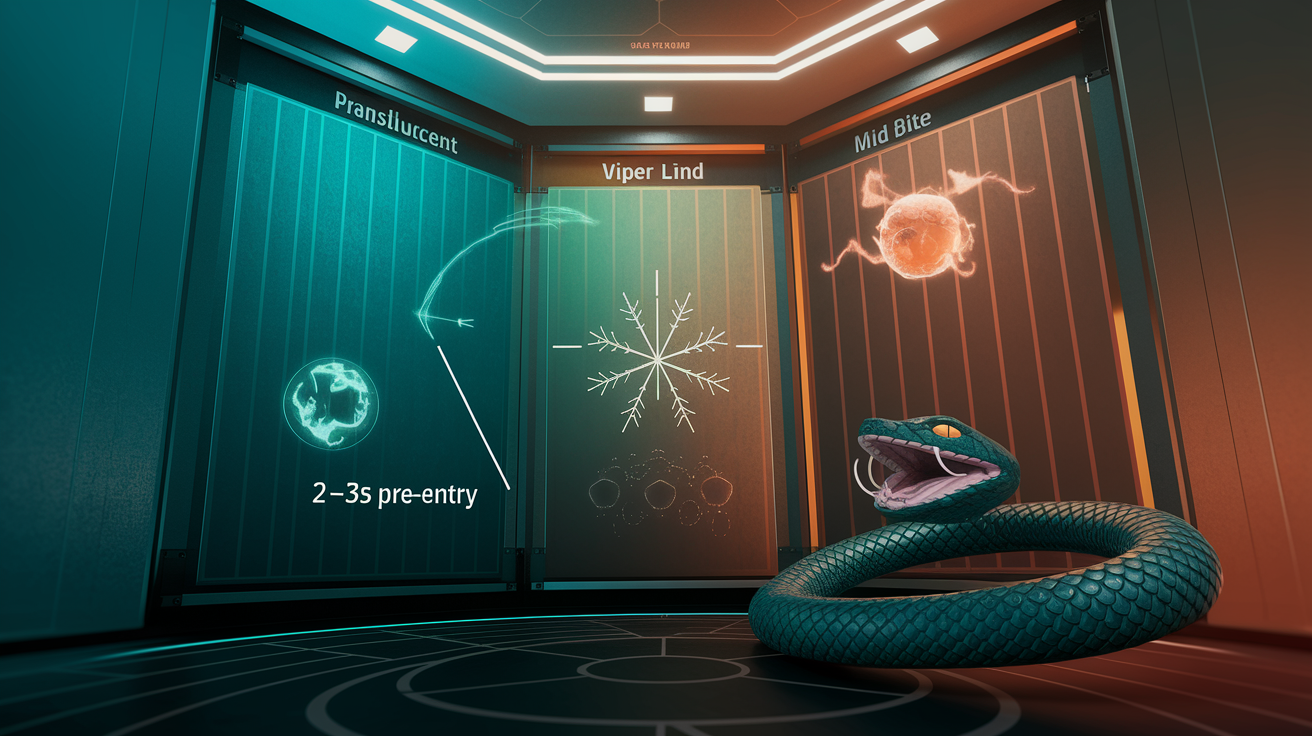
This guide delivers precise, tested Viper lineups built for ranked games, from Iron to Radiant. Every lineup includes an annotated 1920×1080 screenshot showing crosshair aim, standing position, and the exact throw type. Each execute follows a fast plant window: you commit, deploy wall, enter, and spike goes down in 7 to 12 seconds. That speed forces defenders to react instead of settling into crossfires.
The standard utility spend per execute is one Toxic Screen wall, one or two Poison Cloud orb activations, and one Snake Bite molly. Place your wall 2.0 to 3.0 seconds before your team enters, then throw your molly 0.5 to 1.0 seconds after the wall activates to clear close angles or stop defuse attempts. This stagger gives your teammates cover and denial at the same moment. Rank matters in how clean the timing must be. Iron to Gold players can use larger windows and simpler wall angles. Platinum to Immortal squads need tighter sync, around half a second between wall pop and first peek. Radiant matches demand frame tight coordination, multi ability chains, and fake rotations that rely on 0.2 to 0.5 second gaps.
Here are the five universal steps every ranked lineup follows:
- Select your starting anchor, a tile edge, box corner, or map landmark you can find every round.
- Place your Toxic Screen using the correct angle and activation timing, typically 2 to 3 seconds before entry.
- Prepare your Poison Cloud orb with a mental note of when to activate it, usually right before or during the push.
- Coordinate entry timing so your first two teammates cross the threshold within 0.5 to 1.0 seconds of each other.
- Secure plant control within the 7 to 12 second window, using your Snake Bite to deny common hold spots or post plant defuse positions.
When you buy full utility, Viper spends 900 credits total across Poison Cloud at 200, Snake Bite at 300, and Toxic Screen at 400. In ranked, that means on eco or half buy rounds you prioritize the wall first, then one molly if credits allow. The plant window is strict because defender rotations converge around the 15 second mark. If your spike is down by second 10, you control two thirds of the round timer and force the enemy to fight through gas and decay instead of locking you out. Keep these timing numbers visible during practice so muscle memory locks them in.
Viper Ability Fundamentals for Successful Lineups and Executes
Toxic Screen is your primary entry tool. It slices sightlines, forces enemies off angles, and creates temporary one ways when placed at head height over certain boxes or slopes. The wall lasts long enough to cover a full plant sequence and early post plant, but you must activate it before your team peeks or the defenders read the execute and rotate early. Always confirm your wall angle in practice mode so it actually blocks the crossfire you want gone.
Poison Cloud, the gas orb, holds space after you take it. Throw the orb to a choke, corner, or default plant box, then activate when the defenders try to retake or when you need to stall a push. The orb costs 200 credits and can be picked up and redeployed, but most ranked lineups use it once per execute. Common mistakes include activating too early and giving away your plan, or placing the orb where it covers your own teammates instead of the enemy. Test your orb landing spot in custom games and memorize the activation delay, roughly one second from keypress to gas bloom.
Snake Bite, your molly, denies space for four seconds and applies vulnerable. Use it to clear tight corners before entry, to stop defuses post plant, or to zone an enemy off the spike long enough for your team to collapse. It costs 300 credits and you get one per round, so waste it and you lose a critical denial tool. The most common lineup error is throwing too early and letting the molly expire before plant, or aiming it where it lands behind cover and does nothing. Always visualize the puddle footprint and confirm it blocks the exact square you need.
Four pitfalls ruin most Viper executes in ranked:
Misaligned wall angles that leave a sliver of sightline open, letting a defender hold an off angle and pick your entry for free.
Premature Poison Cloud activation that signals your execute three seconds early and gives defenders time to stack or rotate.
Snake Bite landing errors where the molly splashes on a box or wall instead of the ground, creating zero zone denial.
Timing desync between wall pop and entry players, leaving your teammates exposed in the open while the wall is still forming or already fading.
Fix these by recording your games, reviewing failed executes, and drilling the exact crosshair position and timing sequence in custom matches until it runs automatically.
Map-Specific Viper Lineups for Ranked Play (Overview by All Competitive Maps)

Every competitive map in Valorant rewards agents who can cut sightlines and deny retakes, and Viper does both better than anyone when lineups are precise. This article structures map coverage around bombsites, giving you five to eight tested lineups per site. Each lineup is supported by three to six annotated screenshots showing crosshair position, pixel landmarks, and the exact throw type, plus one short 10 to 25 second video clip that demonstrates timing, wall pop, and player movement. The goal is repeatable execution: you see the screenshot, match your position, replicate the aim, and the utility lands where it needs to every time.
Lineups alone don’t win rounds. The competitive edge comes from understanding which defender positions each setup counters, and how to layer your utility so the enemy has no safe angle. On Bind, you counter Hookah window and long. On Haven, you shut down Garage, C Long, and A Heaven. On Ascent, you deny Catwalk, Tree, and main chokes. Breeze forces you to manage massive sightlines across A Hall, mid, and B main. Every map has four to six critical defender holds, and your wall must answer at least two per execute or you feed.
Map tailored screens and one ways let you turn Viper’s decay into a health tax the defenders can’t avoid. A well placed one way wall gives you a pixel peek where you see their head but they see smoke. In ranked, enemies rarely expect the exact angle, so first contact is usually a free pick. After that, adapt. If they start pre aiming your one way, throw a different wall or use your orb to bait them forward, then molly when they commit.
Common defender positions every map section must counter:
Long range operator holds that lock down main entries and force utility burns.
Elevated off angles like heaven, rafters, or catwalks that punish standard clearing.
Close cubby spam spots where defenders sit in corners with shotguns or SMGs and trade your entry.
Rotate flankers who push through smokes or alternate paths the moment your team commits, catching you from behind mid execute.
Breeze A Site Viper Lineups for Ranked Play
Breeze A site is a nightmare of long sightlines, elevated positions, and multiple entries that let defenders crossfire from heaven, back site, and tubes. Viper solves this by cutting the site in half with her wall and using targeted mollies to clear or deny the most dangerous spots. The five lineups below are ranked ready and tested across all tiers.
A Main One-Way Wall
Stand at the left corner of the first wooden crate as you exit A Main, right where the metal beam meets the box edge. Aim your crosshair at the top left corner of the tall metal door frame visible across the site. Place your Toxic Screen with a standard left click cast, activating it 2.5 seconds before your entry player peeks. The wall forms a vertical line that blocks A Heaven and cuts the default plant box from long sightlines, creating a one way at head height over the sandbags near the box.
Your team needs three players for this execute: one entry through main, one following for the trade, and one planting behind the wall. Activate the wall, wait for the gas to settle, then your entry clears left while the second player swings right. Plant immediately behind the sandbags using the wall as cover. Post plant, hold from cave or the cubby near elbow, watching for heaven pushes.
A Garden Deep Molly
From the same wooden crate position, switch to Snake Bite. Aim at the far stone lip visible at the back corner of garden, where the ground meets the low wall. Left click throw and the molly lands deep in garden, denying the common hold spot defenders use to stall plant or counter push. Throw this 0.5 seconds after your wall activates so the molly clears while your team crosses into site.
The molly lasts four seconds, long enough to force any garden player out or confirm the space is clear. If they stay, they take 60 damage minimum and become vulnerable for your teammates to finish. Use this in combination with the A Main wall when you expect a lurker or rotation from garden.
A Heaven Peek One-Way
Position yourself on the square tile directly under the metal awning as you enter A Main. Aim at the bottom edge of the rectangular vent on the A Heaven wall, the one to the left of the double stack boxes. Place your wall with alt fire, creating a shorter, angled screen that sits at head height when viewed from default plant but appears as full smoke from heaven. Activate it 2.0 seconds before entry.
This setup is advanced and works best in Platinum and above because it requires precise crosshair placement and your team must know to crouch peek the one way angle. Position one player behind the wall watching heaven while the other two clear site and plant. The heaven defender sees smoke, you see their outline through decay. First pick almost always goes to Viper here.
A Link Horizontal Cut
From spawn, run to the left side of the metal container near mid. Aim your crosshair at the corner junction where the A Link wall meets the ceiling, roughly two character heights up. Place the wall using standard cast, and it’ll run horizontally across link, blocking vision from elbow and letting your team fast execute from main without worrying about the link crossfire.
This lineup supports a coordinated 4 player push: two from main, one from mid to cut rotations, and Viper activating the wall as the main duo enters. Entry timing is tight, within one second of wall activation. Plant on default and use your orb to hold elbow post plant while your teammates cover heaven and site.
A Plant-Protect Screen
Stand at the default plant position, next to the rectangular metal box. Aim at the top right corner of the double stack on site. Place your Toxic Screen to form a barrier between the planted spike and CT spawn, blocking the most common retake path. Activate this wall the moment the spike is planted, giving your team 2 to 4 seconds to reposition into post plant holds without being seen.
Recommended positions after plant: one player watching heaven from cave, one holding tubes from the metal corner, and Viper anchoring elbow with her orb ready. The wall buys time and forces defenders to either push through decay or rotate the long way, adding 5 to 8 seconds to their retake and shrinking their window to defuse.
Best Viper Lineups on Breeze provides additional A site examples and alternate positions you can adapt when defenders counter your primary setups.
Breeze B Site Viper Lineups for Ranked Play
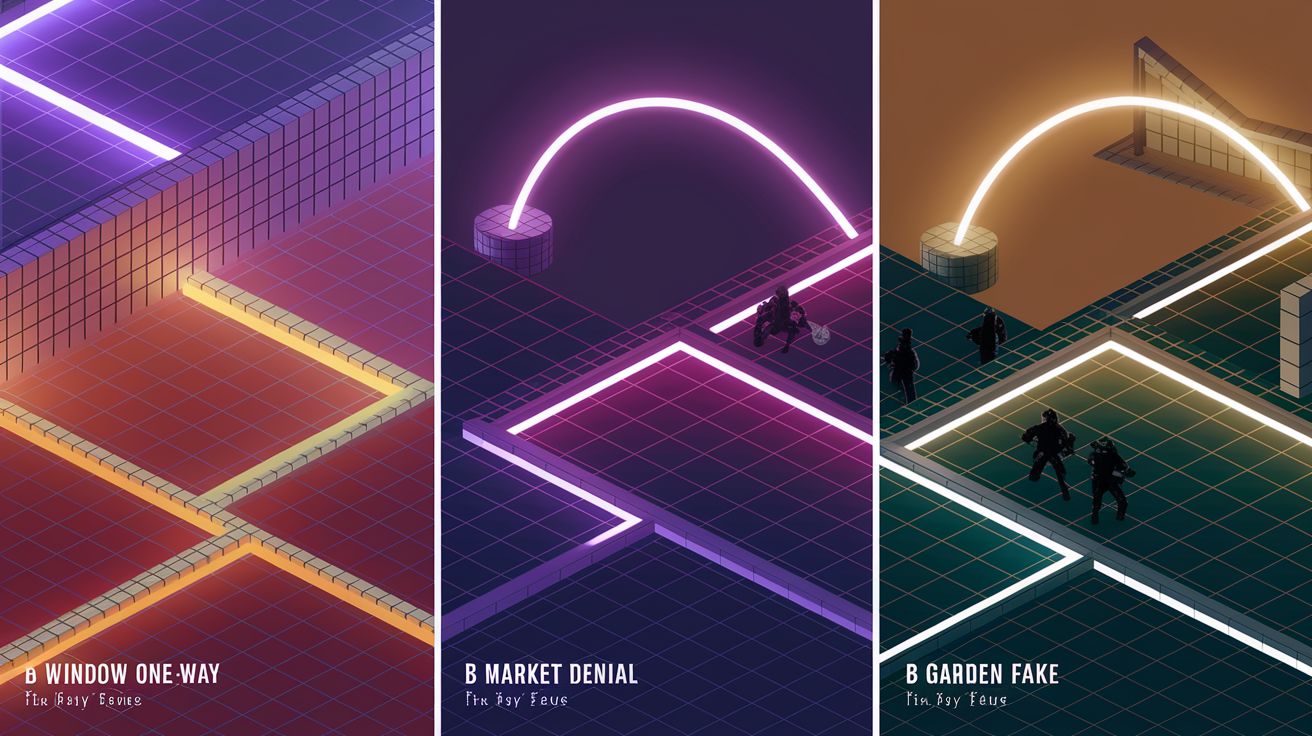
B site on Breeze is tighter than A but still punishes slow executes with crossfires from window, back site, and market. Viper walls that split the site give your team isolated 1v1 fights instead of 3v2 trades that favor defenders. Timing here is critical: activate your wall two seconds before the push, throw your molly half a second after, and commit three players within the next second.
The first lineup is the B Window one way and deep wall. Stand on the raised platform at the B Main entrance, right foot on the seam between the stone tile and metal grate. Aim at the top corner of the tall pillar visible through the doorway. Place your wall and it runs deep into site, cutting window from the plant area and creating a thin one way along the bottom edge where window players see smoke but you see their legs. Activate 2.0 seconds before entry. Your spacing should be three players: entry first, trade second, and a lurker holding elbow or mid to block fast rotates.
B Market denial molly is next. From the same raised platform position, equip Snake Bite and aim at the corner edge of the wooden awning above market. Left click throw and the molly splashes at the back of market, clearing or forcing out any player holding that cubby. Throw this 0.5 seconds after the wall pops so the molly denial happens while your entry is crossing into site. The molly lasts long enough to let your planter reach the default box and start the animation safely.
B Garden fake and rotate cut uses your wall to trick defenders into thinking you’re splitting. Place your wall from mid, angling it to cover the garden entrance to B. Activate it, make noise in mid and garden, then rotate your whole team to A. Defenders will call the B execute, rotate players over, and give up A control. When this works, your A take is almost free because two or three enemies are out of position. Use this once or twice per game when the scoreboard shows the enemy is stacking one site or playing retake heavy.
Lineup goals for B are simple:
Cut window sightlines so your entry doesn’t get insta picked from the elevated angle.
Deny market with molly or orb so defenders can’t sit in the cubby and delay plant.
Use the wall to split site into two halves, forcing defenders to guess which side you’ll plant and commit to.
Viper Mid-Control Lineups and Split-Site Execution Routes
Mid control on most maps unlocks split executes, late round lurks, and rotation cuts that make retakes nearly impossible for the defense. Viper excels here because her Toxic Screen can bisect long sightlines, deny info, and let your team move between A and B without being spotted. The wall timing for mid pushes is slightly faster: activate 1.0 to 1.3 seconds before your players peek so the smoke is fully formed when they cross into the open.
On Breeze, a mid wall from attacker spawn to the pillar near mid doors blocks vision from both elbow and the long mid lane, giving your team a safe window to cross toward A hall or drop into B. On Bind, a short hop wall from showers to lamps cuts hookah window and lets you fake A or rotate to B uncontested. Every map has at least two mid walls worth practicing, and the best ones support multiple execute paths from a single setup.
Mid lineup goals shape how you use the space after taking it:
Information denial. The wall stops defenders from seeing your player count, so they can’t call a rotate until you commit to a site.
Rotate forcing. Place the wall, make noise on one side, then pull back and hit the other site while defenders are shifting.
Lurk safety. Your lurker uses the wall to cross mid unseen, then sits in enemy backline to punish rotations or catch flankers.
Flank blocking. After your team enters a site, redeploy the wall or orb to cut the flank route and stop defenders from surrounding you.
Fake setups. Activate utility in mid, create pressure, then save your lineup and take map control elsewhere while the enemy wastes util clearing a fake execute.
Post-Plant Viper Setups and Ranked Retake Denial
Post plant is where Viper becomes nearly unbeatable if you reposition fast and hold the right angles. The goal is to move into your post plant spot 2 to 4 seconds after the spike is down, before defenders arrive but after you have cover from your wall or orb. Retakes usually start 1.5 to 3.5 seconds after defenders clear initial utility, so your job is to make every second of that window cost them health, space, or players.
Six priority hold positions anchor most post plant setups:
Close plant. One player within five meters of the spike, holding an off angle that punishes the first defuser but has an escape route to avoid trades.
Long plant. One player at maximum distance from the spike, holding a long sightline that catches rotate pushes and lets you fall back if needed.
Flank watch. One player covering the path defenders use to flank, usually the route your team entered from.
Elevated off angle. Heaven, rafters, or any raised position that forces defenders to clear vertically and horizontally.
Viper wall anchor. Viper herself holding behind or beside her wall, using decay to win peeks and reposition when pressured.
Orb pocket. A tight corner or cubby where Viper can activate her orb, deny vision, and either trade or escape depending on numbers.
Recommended retake timings depend on how much utility the defenders burned to enter. If they used two flashes and a recon to clear, expect them to push 2.5 to 3.5 seconds after the dart or last flash. If they dry peek or send one player first, the retake is slower and you can hold tighter angles. Use your minimap to track utility usage and adjust your hold distance.
| Position | Purpose | Recommended Utility |
|---|---|---|
| Close plant | Deny defuse, punish first retake player | Snake Bite ready, orb if needed |
| Viper wall anchor | Hold through decay, reposition safely | Wall active, save molly for defuse stop |
| Flank watch | Stop rotate collapses from behind | Orb or teammate smoke |
Countering Enemy Utility and Adapting Viper Lineups in Ranked Matches

Defenders will counter your Viper setups with recon abilities, hard utility clears, and coordinated pushes that break your gas before you can capitalize. Sova recon darts reveal your position and let enemies pre aim or nade you off the lineup. Cypher cameras spot your setup and call rotations early. Heavy flash clears, especially from Breach or Skye, blind you through gas and let the entry player swing for free. Grenade spam from Raze, KAY/O, or Brimstone can destroy Poison Cloud orbs or force you off your molly spot before you throw.
Expect one to two defenders to focus on breaking your canisters within 3 to 5 seconds of seeing your gas. If you place an orb in an obvious spot and activate it early, skilled players will nade it, flash through, or simply wait for it to time out. The fix is to delay your orb activation until the exact moment you need it, forcing them to commit before they can counter. For Sova darts, listen for the audio cue and reposition immediately. Don’t sit in the same corner for more than two seconds after a dart lands near you.
When enemies run utility heavy compositions, adjust your lineup order and timing:
Delay your wall activation by one to two seconds if you see or hear recon utility, giving your teammates time to shoot the dart or avoid the reveal window.
Throw your molly to remove close angles and force defenders back before they can set up crossfires or spam grenades.
Save your orb and only activate it after the defenders commit, making it harder for them to destroy before retake.
Coordinate with teammates to bait enemy flashes first, then pop your wall when the flash duration expires.
Practicing and Perfecting Viper Lineups for Ranked Play
Repeatable lineups require muscle memory, and muscle memory comes from drilling the exact position, crosshair aim, and timing sequence until your hands move faster than your brain. Use custom games with cheats enabled to practice every lineup at least five times in a row before moving to the next. Record a 10 to 25 second clip each time, comparing your crosshair position to the reference screenshot and checking that the wall or orb lands in the same spot.
Five step drill routine for any Viper lineup:
Load the map in a custom match, enable infinite abilities, and navigate to the lineup position using your screenshot as the guide.
Match your standing position to the pixel landmark, and align your crosshair to the exact aim point shown in the reference image.
Execute the throw or placement, then immediately check the result against the reference clip to confirm the utility landed correctly.
Repeat the lineup five times without moving, focusing on speed and consistency instead of perfection.
After five reps, test the lineup in a live scenario by running a full execute from spawn to plant, syncing the wall or orb with simulated entry timing.
When you capture your own practice clips, keep them short and focused. A 15 to 20 second video showing your crosshair position, the throw input, and the final utility placement is enough to review and compare. Take three to six screenshots per lineup: one showing your feet position, one showing crosshair aim, one showing the utility in flight, and three showing the final coverage from different angles.
Valorant Strategy Maker lets you build and refine lineups using an interactive map tool, then export annotated images for quick reference during matches or practice sessions. Use it to mark your exact positions, save timing notes, and share setups with your team so everyone runs the same execute version.
Quick-Reference Table of Ranked-Optimized Viper Lineups
Below is a fast lookup summary of the eight core lineups covered in this guide. Use this table mid match to confirm timing windows, cast types, and the primary purpose of each setup.
| Lineup | Site | Cast Type | Timing (s) | Purpose |
|---|---|---|---|---|
| A Main One-Way Wall | Breeze A | Standard left-click | 2.5 pre-entry | Block Heaven, create one-way over sandbags |
| A Garden Deep Molly | Breeze A | Left-click throw | 0.5 post-wall | Clear garden hold, deny lurker |
| A Heaven Peek One-Way | Breeze A | Alt-fire short | 2.0 pre-entry | One-way advantage vs Heaven defender |
| A Link Horizontal Cut | Breeze A | Standard left-click | 1.0 sync with entry | Block elbow crossfire, fast execute |
| A Plant-Protect Screen | Breeze A | Standard left-click | 0.0 at plant | Block CT retake, buy reposition time |
| B Window One-Way / Deep Wall | Breeze B | Standard left-click | 2.0 pre-entry | Cut window, isolate fights |
| B Market Denial Molly | Breeze B | Left-click throw | 0.5 post-wall | Clear market cubby, safe plant |
| B Garden Fake / Rotate Cut | Breeze B | Standard left-click | Variable, pre-rotate | Fake split, force defender rotation |
Final Words
Plant now: place the Toxic Screen 2–3 seconds before entry, cast Poison Cloud to block peeks, then molly 0.5–1s after to lock the site for a 7–12s plant window.
This guide gave ranked-ready Viper lineups, ability fundamentals and economy notes, map-specific setups (Breeze A and B), mid-control routes, post-plant holds, counterplay fixes, practice drills, and a quick lookup table.
Use these Valorant Viper lineups and site-execution strategies for ranked play to cut mistakes, sync timings with teammates, and win more rounds. Practice it and you’ll see the improvement.
FAQ
Q: What is the ranked-ready Viper execute framework and timing?
A: The ranked-ready Viper execute framework focuses on fast commits: plant between 7–12 seconds after commit, using 1 Toxic Screen, 1–2 Poison Clouds, and 1 Snake Bite; wall 2–3s before entry.
Q: What are the universal steps for Viper lineups?
A: The universal steps for Viper lineups are: select starting anchor, cast wall 2–3s before entry, ready Poison Cloud, coordinate entry timing, and secure a 7–12s plant window for the spike.
Q: How should I spend Viper utility for ranked executes and timing windows?
A: For ranked executes spend at least Toxic Screen (400), one Poison Cloud (200), and one Snake Bite (300); wall should go 2–3s before entry, molly 0.5–1s after wall, plant by 7–12s.
Q: What role do each of Viper’s abilities play in executes?
A: Each ability’s role: Toxic Screen creates entry cover, Poison Cloud holds space and blocks sight, Snake Bite denies plant spots and removes close angles. Use them layered to secure site and plant.
Q: What common mistakes happen when using Viper lineups?
A: Common mistakes are misaligned wall angles, activating Poison Cloud too early, molly landing off-target, and desynced timing with entry players—these break one-ways and cost plants or trades.
Q: How will the article cover map-specific Viper lineups?
A: The article covers 5–8 lineups per site with annotated screenshots, crosshair anchors, throw-foot overlays, timing windows, and 10–25s clips so you can reproduce each lineup on every competitive map.
Q: What Breeze A-site lineups should I learn first and when to use them?
A: The Breeze A-site lineups to learn first are A Main one-way, Garden deep molly, Heaven peek one-way, Link horizontal cut, and plant-protect screen; use them for executes aiming 8–14s plant windows and anti-Operator holds.
Q: What Breeze B-site setups are best for ranked play?
A: The Breeze B-site setups to use are Window one-way/deep wall, Market denial molly, and Garden fake/rotate cut. Run three-player spacing: entry, trade, lurk; wall 2s before push, molly 0.5s after.
Q: How do I use Toxic Screen for mid-control and split executes?
A: Toxic Screen for mid-control should bisect sightlines, activate 1.0–1.3s before peeks to enable mid-to-A or mid-to-B transitions, deny info, block rotations, and give lurkers safer lanes.
Q: How should I position and time Viper post-plant holds?
A: For post-plant holds reposition 2–4s after plant, take priority gas angles from the six recommended spots, deny defuse lanes with molly, and expect retake pushes 1.5–3.5s after utility clears.
Q: How do I adapt Viper lineups when enemies counter with recon or utility?
A: Adapt by delaying smokes if Sova or Cypher is active, use Snake Bite to clear close angles, molly likely clear spots, and anticipate 1–2 defenders breaking canisters within 3–5s.
Q: How should I practice and record lineups to perfect them?
A: Practice in custom games with repeatable positions: run 5–10 drills per lineup, capture 3–6 screenshots and a 10–25s clip, and use ValoPlant or recording tools to compare and refine.
Q: What does the quick-reference table include?
A: The quick-reference table summarizes eight ranked-optimized lineups with lineup name, site, cast type, timing window, and purpose for fast lookup during warmups or pre-game planning.