


Think brute force is the easiest way into the rival camp? You’re wasting time, and probably a save file.
This walkthrough shows the stealth routes, the dialogue checks you’ll meet (Persuasion, Deception, Intimidation, typical DC 10–15), and the spells and items that turn risky rolls into safe passes.
I’ll give step-by-step entry corridors, who to send to the gate, when to cast Pass Without Trace or use an invisibility potion, and the exact recovery moves if a check fails.
No fluff. Just next actions that win the infil without a wipe.
Core Infiltration Pathway for the Rival Camp (Stealth Routes + Dialogue Check Requirements)
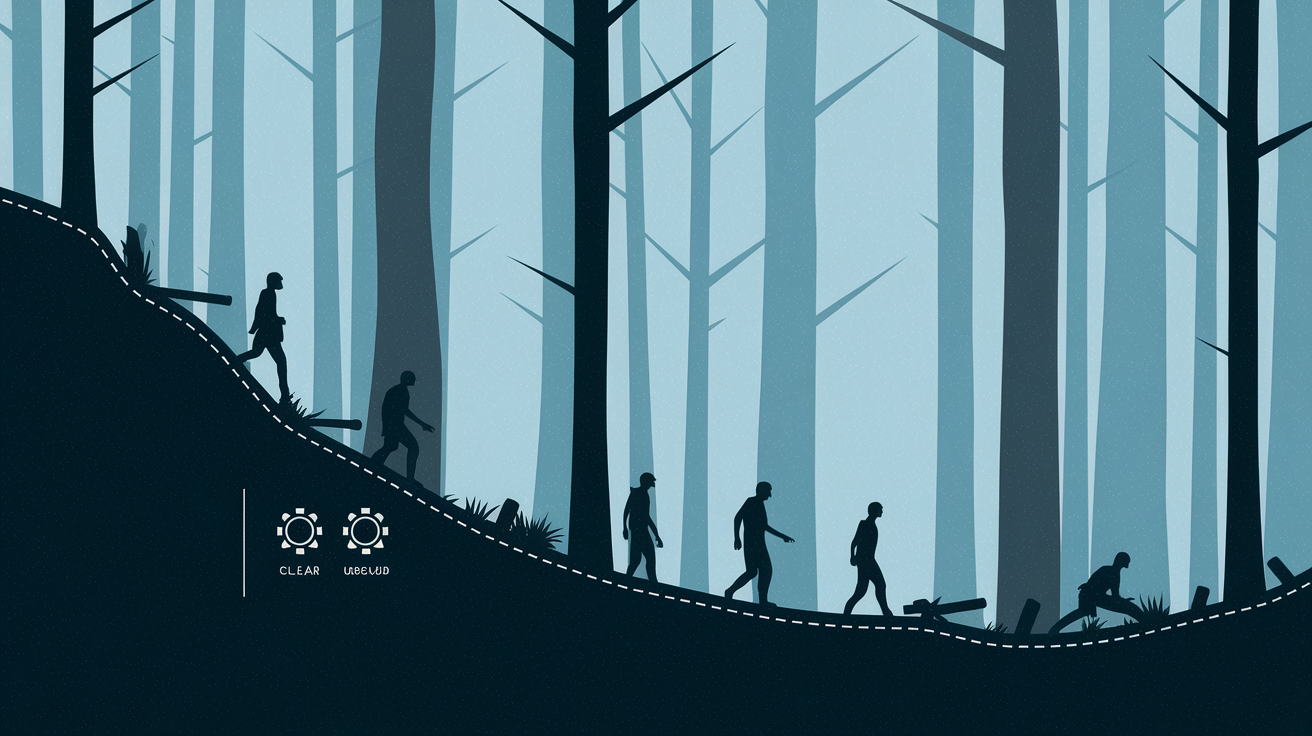
Before you hit the camp perimeter, toggle stealth mode. Press C for your lead character, Shift + C for the whole group. The sun icon on your cursor tells you what you’re working with: fully bright sun means Clear, no hiding possible. Shadowed sun is Lightly Obscured, where stealth checks roll when enemies look your way. Empty sun shows Heavily Obscured zones, free movement unless you walk right up to a guard. Hold Shift to throw red vision cones onto the ground so you know exactly where sight lines end. Split your stealthiest character from the pack by clicking their portrait and right-clicking away. This keeps your Rogue or Ranger ahead without dragging low-Dex companions into detection range.
Move along the outer edge using terrain cover and dark pockets. Look for small climbing points on the right flank or fallen tree trunks on the left. Both offer natural Heavily Obscured segments. Scan movement tiles for trap icons before you commit. Track the timing of lookout watchers by holding Shift and watching when their vision cones sweep away from your intended path. If a patrol turns toward you in a Lightly Obscured zone, your stealth roll triggers immediately. Characters without proficiency or high Dex will probably fail, so retreat into Heavily Obscured cover or wait for the patrol to pass.
The main gate usually asks for Persuasion, Deception, or Intimidation with a DC between 10 and 15. Stack bonuses by putting your highest Charisma character in front. Bards, Warlocks, and Paladins usually carry +3 to +5 Charisma modifiers plus proficiency. Equip any gear that grants advantage on Charisma checks before you start the conversation. If you have an Illithid power available, it auto-succeeds and skips the roll entirely, eliminating all risk of a failed persuasion attempt at the gate. Save an Inspiration point for rerolls if your primary talker has only a moderate bonus.
If the dialogue check fails or you refuse the guard’s demand, switch immediately to a stealthed backup character still outside the gate. Classes with bonus-action Hide (Rogue Cunning Action, Gloom Stalker Dread Ambusher, Shadow Monk Shadow Arts) can duck into shadows on the same turn the conversation ends. Drink a Potion of Invisibility or activate Umbral Shroud to reset enemy alert status. Once combat search mode triggers and enemies lose sight of you, the encounter can end and you can re-approach from a different angle. Use Shift + Space to lock into turn-based mode during retreats so you can control exact movement increments and avoid stumbling into additional vision cones.
Complete infiltration steps:
- Quicksave with F5 before approaching the outer camp boundary or initiating any guard conversation.
- Scan lighting with the sun cursor icon and mark all Heavily Obscured safe zones along two or three possible entry corridors.
- Attempt the front-gate dialogue check first if your party includes a character with +7 or higher to Persuasion, Deception, or Intimidation. Expect DC 10 to 15.
- If the check fails, reload or immediately activate bonus-action Hide and retreat into the nearest Heavily Obscured pocket.
- Switch to the side stealth route (right climbing ledge or left fallen-tree path) and move one character at a time to prevent simultaneous detection or terrain collapses.
- Once inside the perimeter, maintain Heavily Obscured positioning and use turn-based mode (Shift + Space) to control patrol intersections frame by frame.
Stealth Detection System Deep Dive (Advanced Formulas and Edge Cases)

Enemy Perception uses a contested roll against your Dexterity (Stealth) total whenever you enter or remain inside a Lightly Obscured vision cone. The guard rolls 1d20 plus their Perception modifier. Common camp sentries carry +2 to +4 Perception and compare the result to your 1d20 plus Dexterity modifier plus proficiency if you have stealth training. Darkvision changes the formula by treating Lightly Obscured zones as Clear and Heavily Obscured zones as Lightly Obscured, meaning a guard with Darkvision forces a stealth check even in deep shadow if you cross their cone. Advantage on your stealth roll adds a second d20 and takes the higher result, often coming from spells, certain gear, or environmental conditions like rain. Disadvantage works in reverse and is common when wearing medium armor without specific enchantments that negate the penalty.
Shadow Monks gain invisibility for one turn after spending a ki point on Shadow Arts, which converts all zones into Heavily Obscured for that character during the duration. Essentially a brief auto-pass window. Rogues with Expertise double their proficiency bonus on stealth checks, turning a modest +2 into +4 and scaling to +6 or higher at mid levels. Rangers who choose Natural Explorer for underground or urban terrain (depending on camp classification) gain advantage on all stealth rolls in that favored environment, stacking with Pass Without Trace or gear bonuses. Gloom Stalkers also add their Wisdom modifier to initiative and become invisible to Darkvision users in darkness, creating a rare immunity to the Darkvision penalty and allowing Heavily Obscured movement even against otherwise-alert sentries.
Rare bugs and edge cases can produce unexpected detections. Some vision cones flicker or update late when enemies rotate during real-time mode, causing “phantom” detections even when the red overlay showed clear ground. Toggling turn-based mode forces instant cone updates and prevents this. Certain destructible objects or corpses can block line of sight inconsistently, showing as Clear on the cursor but acting as Lightly Obscured in practice. Test with a quicksave. Audio-trigger events like knocking over a bottle or weapon rack can alert nearby NPCs without a vision-based detection, bypassing stealth rolls entirely and forcing a timed investigation sequence.
Uncommon stealth interaction examples:
Casting a concentration spell while hidden doesn’t break stealth unless the spell effect creates visible light or hits an enemy.
Climbing or jumping is treated as movement and doesn’t end Hide status, but landing in a Clear zone instantly reveals you regardless of prior rolls.
Some enemies with the Alert feat ignore your advantage on stealth and can’t be Surprised, even if all other conditions are met.
Stacking multiple sources of advantage (Pass Without Trace environmental bonus plus gear advantage) doesn’t grant “super advantage.” You still roll two dice and pick the higher.
Spell and Consumable Toolkit for Rival Camp Infiltration in BG3

Pass Without Trace is the single most powerful infiltration spell, granting every party member within range a flat +10 bonus to Dexterity (Stealth) checks for up to one hour. It turns a modest +3 into +13 and makes even low-Dexterity Fighters viable for sneaking. Rangers and Druids prepare it at level 3, and it requires concentration, so the caster must avoid damage or maintain a high Constitution save to keep it active through the entire route. Greater Invisibility (level 5 spell, available to Bards, Sorcerers, and Wizards) lets one character remain invisible for up to 10 turns even while attacking, but each attack after the first increases the stealth DC you must beat. First attack DC 15, second DC 17, third and beyond add +1 per strike. Combine Greater Invisibility with Pass Without Trace and Expertise to sustain multiple stealth attacks before detection, but expect to fail eventually unless your stealth total exceeds +15.
Minor Illusion (cantrip for Bard, Sorcerer, Wizard, Warlock, Arcane Trickster, Shadow Monk) creates a sound or image that draws one or two guards away from a choke point. Cast it behind a tent or around a corner, wait for the patrol to investigate, then slip past the now-empty corridor. Sleep and Charm Person offer non-lethal crowd control when entering dialogue or positioning for dialogue, putting low-HP guards unconscious or converting a hostile into a temporary ally who ignores your movement. Silence shuts down verbal alarms and prevents guards from calling reinforcements via shout. Cast it over an alarm drum or a cluster of sentries before initiating a stealth kill or dialogue attempt.
Consumables patch gaps when your party lacks the right spells. Potion of Invisibility provides the same effect as the 2nd-level spell for a few turns, perfect for getting one character past a lookout or resetting aggro mid-fight. Umbral Shroud and Cloak of Shadows are reusable items that trigger short invisibility windows, guaranteeing surprise on the next attack or allowing a quick reposition without spending a spell slot. Scrolls of Misty Step, Dimension Door, or Summon Quasit let non-casters teleport over walls or summon an invisible scout. The Quasit can use its own Invisibility ability to enable surprise rounds for the party.
Top infiltration items and spells with exact benefits:
Pass Without Trace: +10 to all stealth checks, 1 hour, concentration (Ranger/Druid level 3).
Greater Invisibility: Invisible for 10 turns, attacks allowed, stealth DC starts at 15 and scales +2 then +1 per attack (Bard/Sorcerer/Wizard level 5).
Potion of Invisibility: Invisible until you attack or the duration ends, single use, no concentration.
Minor Illusion: Distract one or two guards for 6 seconds, cantrip, no resource cost.
Umbral Shroud: Reusable short invisibility, triggers once per short rest, equip in armor or accessory slot.
Scroll of Misty Step: Teleport 60 feet ignoring terrain, bypasses patrols, single use.
Summon Quasit (scroll or spell): Invisible familiar, can scout or enable surprise, one-time scroll or scribed into Wizard book for repeatable use.
Party Composition and Stealth Build Optimization for BG3 Camp Infiltration

Rogues dominate infiltration because Cunning Action lets them Hide as a bonus action every turn, leaving their main action free to Dash, interact with objects, or attack. Arcane Trickster adds invisible Mage Hand Legerdemain for remote lockpicking and item theft, plus Minor Illusion and other utility cantrips, making them the best solo infiltrator when paired with Expertise in Stealth and high Dexterity. Rangers with the Gloom Stalker subclass gain Dread Ambusher for bonus-action Hide, advantage on initiative, and immunity to Darkvision detection in darkness. Plant them in Heavily Obscured zones and they become nearly undetectable. Shadow Monks spend ki for bonus-action Hide via Shadow Arts and gain short-duration invisibility, but their reliance on ki points limits long infiltrations unless you rest frequently.
Gear dictates success for non-Rogue classes. Light armor or no armor avoids the disadvantage penalty, so prioritize Dexterity-based builds and unarmored Monks or lightly armored Bards. Equip any items that grant flat stealth bonuses (boots, cloaks, rings that add +1 or +2) and seek advantage-granting accessories like Hood of the Weave or Shadowed Ring. Medium armor automatically imposes disadvantage on stealth unless the item description explicitly negates the penalty. Read tooltips carefully and swap to light alternatives even if it costs a few AC points. Noise penalties aren’t explicitly tracked in BG3, but heavy boots or metal armor can trigger contextual dialogue or scripted detection in certain story beats, so default to cloth and leather during infiltrations.
Multiclass combinations stack benefits that single classes can’t match. A Rogue 3 / Bard 3 split gives you Expertise in Stealth and Persuasion, Cunning Action for bonus Hide, and access to Pass Without Trace if you pick Lore Bard. You become both the infiltrator and the dialogue lead. Ranger 5 / Rogue 3 (Gloom Stalker / Thief) provides Extra Attack, Dread Ambusher, Fast Hands for bonus-action item use, and two Expertise picks. Perfect for long-range stealth sniping followed by quick repositioning. A two-level dip into Warlock (any patron) grants Eldritch Blast and Invocations like Devil’s Sight, which lets you see in magical darkness that blocks enemy vision, creating safe movement corridors your party can exploit with the Darkness spell.
| Class/Build | Key Stealth Benefit | Best Use in Camp |
|---|---|---|
| Rogue (Arcane Trickster) | Bonus-action Hide, Expertise, invisible Mage Hand | Solo infiltration, remote lockpicking, guaranteed stealth checks |
| Ranger (Gloom Stalker) | Bonus-action Hide, Darkvision immunity, advantage on initiative | Scouting in darkness, surprise sniper attacks, safe repositioning |
| Bard (Lore or any) | Pass Without Trace, high Charisma for dialogue, Jack of All Trades | Support caster for party-wide +10 stealth, backup dialogue face |
| Rogue/Bard multiclass | Expertise in Stealth + Persuasion, Cunning Action, utility spells | Dual role infiltrator and talker, handles both stealth and dialogue gates |
Dialogue Skill Checks, DC Targets, and Social Engineering Inside the Rival Camp

Dialogue DCs are calculated by the game using a hidden base value (typically 10 for routine checks, 15 for challenging) modified by your ability score, proficiency, and any circumstantial bonuses or penalties. A Persuasion check with +5 Charisma and +2 proficiency gives you a total modifier of +7. Rolling a 10 or higher on the die produces 17 or better, enough to clear most standard camp-entry checks. Advantage doubles your chance of success by rolling two d20s and keeping the higher result, so spells like Enhance Ability (Charisma) or items that grant advantage on social checks become critical before high-stakes conversations. Proficiency in Persuasion, Deception, or Intimidation adds +2 at low levels and scales to +6 by level 17, making it essential to assign dialogue roles to characters with both high Charisma and trained skills.
Inspiration is a reroll resource tied to your character’s background. When you fail a crucial check, spend Inspiration to reroll the d20 immediately and take the new result. Save Inspiration for dialogue gates that block progress or trigger combat, such as convincing a camp leader to grant entry or lying about your allegiance. Advantage can also come from earlier story choices. Helping an NPC in a previous quest may grant you “Friend of the Camp” status, giving automatic advantage on related Persuasion attempts. Items like the Silver Pendant of the Goddess or the Magistrate’s Amulet add +1 or advantage to specific Charisma skills, so equip them on your dialogue lead before entering camp boundaries.
NPC suspicion changes depending on which skill you choose. Persuasion works when your goal aligns with the NPC’s interests or when you present a mutual benefit. It rarely triggers hostile responses even on failure. Deception requires an opposing Insight roll from the NPC. Guards with high Wisdom or Insight proficiency can detect lies and escalate to combat, so use Deception only when your party’s Charisma modifier is at least +4 and you have advantage or Inspiration ready. Intimidation can bypass lower-DC checks by forcing compliance through fear, but it often locks you out of peaceful resolutions later in the camp. Choose it when you plan to fight your way out anyway.
Five predicted dialogue scenarios and optimal responses:
- Gate guard demands identification: Persuasion DC 12 or Deception DC 10, Illithid auto-pass available, failure triggers humiliation option or combat.
- Patrol questions your presence near restricted tents: Intimidation DC 13 (if wearing armor and armed) or Deception DC 15, failure starts timed alert before reinforcements arrive.
- Camp leader asks why you seek entry: Persuasion DC 15, advantage if you helped an allied NPC earlier, failure forces bribery or combat.
- Merchant suspects you stole an item: Deception DC 14 contested by NPC Insight +3, failure triggers theft accusation and guards join.
- Drunk sentry offers gossip for coin: Persuasion DC 10, automatic success with 10+ gold bribe, reveals patrol timing and officer location.
Using Distractions, Lures, and Environment Control in BG3 Rival Camp Walkthroughs

Minor Illusion creates a sound or visual decoy that pulls one or two guards toward it for six seconds. Cast it behind a building corner, wait for the patrol to investigate, then move through the vacated corridor before they return. The spell has no resource cost and resets every short rest, making it repeatable for clearing multiple chokepoints. Invisible Mage Hand from Arcane Trickster or the Find Familiar Quasit can manipulate levers, open doors, or drop objects to create noise distractions without risking your character’s position. The hand remains invisible and can’t be targeted by enemies unless they have True Sight.
Summon Quasit (scroll or spell if scribed into a Wizard spellbook or accessed via Warlock/Sorcerer dialogue with the companion Shovel) provides an invisible scout that can toggle its own Invisibility ability as a bonus action. Send the Quasit ahead to trigger traps, observe patrol paths, or position near a target to enable your party’s surprise round. It doesn’t break your stealth when it acts, and its death doesn’t alert enemies unless it dies within their vision cone. Alternatively, use a regular familiar like an owl or spider to fly or crawl into vents and gaps your party can’t reach, scouting interior layouts and marking enemy positions on your minimap.
Environmental hazards include explosive barrels, climbable ledges, destructible walls, and narrow bridges that limit patrol group size. Destroy a rope ladder after your Rogue climbs up to prevent pursuit, or shoot an oil barrel near a cluster of guards to eliminate them without entering melee range. Gaps in fences, hidden doors behind movable crates, and ventilation shafts often bypass entire patrol zones. Scan walls and floors with the Alt key to highlight interactive objects. Push heavy objects like boulders or carts to block patrol routes, forcing guards into longer loops that open brief safe windows for crossing.
Five tested distraction methods:
Minor Illusion sound: Lure 1 to 2 guards 20 feet away for 6 seconds, cantrip with no cooldown.
Invisible Mage Hand item drop: Knock over a cup or weapon rack remotely, draws investigation without revealing caster.
Summon Quasit invisible scout: Invisible familiar triggers traps, observes patrols, enables surprise rounds.
Explosive barrel detonation: Eliminate grouped patrols from range, often faster than stealth when groups are clustered.
Movable object obstruction: Block doorways or hallways with crates or corpses, reroutes patrol AI into longer paths.
Long-Range Stealth Attacks, Non-Combat Solutions, and “No-Alert” Progression in Rival Camp

Long-range stealth sniping requires a longbow or shortbow (hand crossbows lack sufficient range unless fired from extreme elevation), stealth proficiency with Expertise, Pass Without Trace for the flat +10 bonus, and additional advantage sources from gear or spells. Position your archer on a rooftop or cliff edge far outside the camp’s central patrol radius, 80 to 100 feet or more, so that even after firing, your distance keeps you outside enemy search range. Fire at isolated targets like lone watchers or rear sentries, then immediately Hide as a bonus action if you have Cunning Action or Dread Ambusher. The game rolls a stealth check after your attack. If you beat the enemy’s Perception, they search but don’t locate you, and combat never formally begins.
Pacifist or non-lethal runs rely on Sleep (affects low-HP humanoids, guaranteed unconsciousness with no save), Charm Person (turns one enemy friendly for the duration, ignores your movement), and invisibility resets to avoid all violence. Cast Sleep on guards blocking a gate, walk past them while they nap, then let them wake naturally after you move two zones away. No alarm triggers and no kills are recorded. Charm the camp’s second-in-command during dialogue to gain an escort deeper into restricted areas, using their presence to bypass additional checks. If you accidentally trigger combat, drink a Potion of Invisibility or activate Umbral Shroud, then Hide. Once enemies lose line of sight and the search timer expires, combat ends and alert levels reset, allowing you to re-enter stealth and continue.
Greater Invisibility enables multi-turn attack chains inside the camp. The first attack you make while invisible forces a DC 15 stealth check from the enemy, the second raises it to DC 17, and each additional attack adds +1 to the DC. Third attack is DC 18, fourth is DC 19, and so on. With Pass Without Trace (+10), Expertise (+4 to +6), high Dexterity (+4 to +5), and advantage from gear, you can sustain three to five attacks before detection becomes likely. Focus fire on high-priority targets like alarm drummers, spellcasters, or officers who can call reinforcements, eliminating them before the rest of the camp realizes combat has started.
Four attack or non-combat options with pros and cons:
Long-range sniper loop: Pro, no combat initiation, infinite attempts if you retreat. Con, slow, requires very high stealth total, fails if patrol closes distance.
Sleep spam on clustered guards: Pro, guaranteed unconsciousness, non-lethal, no alarm. Con, only works on low-HP targets, high-level enemies resist.
Charm Person escort: Pro, bypasses multiple dialogue checks, grants temporary ally. Con, short duration, breaks if you attack anyone, limited to one target.
Greater Invisibility burst damage: Pro, multiple free attacks before detection, can eliminate key threats. Con, requires level 5 spell slot, concentration, very high stealth bonuses, eventually fails.
Enemy Patrol Patterns, Lighting Control, and Timing Windows for BG3 Rival Camp Penetration

Enemy patrols follow fixed routes with predictable turn intervals. Enter turn-based mode with Shift + Space and advance one round at a time to track exactly when a guard faces away or moves to the far end of their loop. Most patrols complete a circuit in 12 to 18 seconds of real time, translated to roughly 2 to 3 combat rounds. Mark the moment a sentry turns 180 degrees away from your intended path, then move during that window. If you time it correctly, you cross the danger zone before they rotate back. Some camps include overlapping patrols where two guards never leave a corridor simultaneously, requiring a distraction (Minor Illusion, thrown object) to pull one guard out of sync.
Force or break patrol cycles by using illusions or controlled movement to bait a guard into an investigation state. Cast Minor Illusion at the far end of a patrol route. The guard walks toward it, extending their loop by 6 to 10 seconds and opening a gap behind them. Alternatively, throw a consumable item (a potion, a piece of food) into a corner to trigger a brief investigation, freezing that guard’s normal route. Once the guard returns to their default position, the cycle resumes, but you’ve gained the time needed to reposition or advance one character forward.
Lighting control involves extinguishing torches, braziers, and magical light sources to convert Clear zones into Lightly or Heavily Obscured. Shoot torches with arrows, cast Create Water or Ray of Frost to douse flames, or use Mage Hand to remove portable light sources from their stands. Each extinguished light expands the Heavily Obscured radius by 10 to 20 feet, creating new safe corridors. Some camps feature magically sustained lights that can’t be extinguished. Identify these early and route around them, or use Darkness (2nd-level spell) to create a 15-foot-radius sphere of magical shadow that overrides normal lighting rules and blinds enemies without Devil’s Sight.
Five patrol-timing rules for safe windows:
- Wait for 180-degree turn: Guards can’t detect behind them. Move the instant their vision cone points fully away, giving you 1 to 2 rounds of safety.
- Count the loop: Track full patrol cycles in turn-based mode. Most guards return to start position every 12 to 18 seconds (2 to 3 rounds).
- Overlap gaps appear at corners: When two patrols meet and separate, a 1-round gap opens behind both. Cross during that single-round window.
- Investigation freezes default AI: Throw an object or cast an illusion to lock a guard in place for 6 seconds, breaking their normal route.
- Darkness resets vision cones: Extinguish lights or cast Darkness to eliminate red cones entirely in that radius, making all movement safe unless you bump into a guard.
Save Optimization, Quickload Strategy, and Failure Recovery During Infiltration

Quicksave with F5 before every high-risk action. Entering a new camp zone, starting a dialogue with a guard, moving through a Lightly Obscured corridor with overlapping patrols, or attempting a long-range stealth attack. Predict failure points by identifying moments where a single bad roll ends the run: a failed Persuasion check that triggers combat, a failed stealth check in a Lightly Obscured zone that alerts four guards simultaneously, or a missed attack that breaks invisibility without killing the target. Save immediately before these moments so you can quickload with F8 and retry with full knowledge of enemy positions and patrol timing.
When invisibility or a failed stealth check triggers combat, prioritize retreat over fighting unless you’re confident you can wipe the immediate group before reinforcements arrive. Drink a Potion of Invisibility, activate Umbral Shroud, or cast Invisibility on your detected character, then move away from the engagement zone using Dash or Misty Step. Once enemies lose line of sight and begin their search behavior, Hide as a bonus action if available. If the search timer expires without redetection, combat formally ends and the camp returns to passive patrol mode. You can then re-approach from a different angle or wait for patrols to reset before trying again.
Most common infiltration mistakes include moving multiple characters simultaneously and triggering detection on the entire party instead of one scout, forgetting to check for Darkvision when hiding in Heavily Obscured zones, initiating dialogue without equipping Charisma-boosting gear, and failing to extinguish nearby light sources before entering a corridor. Correct these mid-run by immediately splitting your party when one member is detected (the rest stay hidden and out of combat), using turn-based mode to verify Darkvision cones before committing to a “safe” shadow, swapping to your dialogue character before conversations start, and making a habit of shooting or dousing every visible light source during your initial scout pass. If you realize you’ve made a positioning error, quickload rather than trying to salvage it. Most failed infiltrations cost more time in recovery than simply reloading and moving correctly from the start.
Final Words
Slipping past the last patrol, the plan is simple: pick a quiet side route, time the lights, and set up your dialogue approach before you hit the gate.
This guide covered the full run — core infiltration routes, detection tiers, dialogue DC prep, spells and consumables, ideal party builds, distraction tricks, long-range options, patrol timing, and quicksave recovery.
Use this Baldur’s Gate 3 rival camp infiltration walkthrough stealth and dialogue checks as your checklist on runs. Quicksave smart, stay calm, and the camp folds when you follow the plan.
FAQ
Q: Who is the most romanced character in Baldur’s Gate 3?
A: The most romanced character in Baldur’s Gate 3 is often Astarion, thanks to his strong flirting arc and companion quest appeal, though player preference and patch additions can change who’s most popular.
Q: What items should you not sell in BG3?
A: You should not sell quest items, unique artifacts, spell scrolls, rare weapons/armor, high-tier potions (like Invisibility), or companion-specific equipment, since they’re often irreplaceable or valuable for future options.
Q: How to free the illithid captive?
A: To free the illithid captive, resolve guard checks with Persuasion/Deception/Intimidation (DC ~10–15), or sneak in, pick locks/pockets for keys, use Charm/Invisibility spells, and quicksave before the attempt.
Q: How to check stealth in BG3?
A: To check stealth in BG3, use the Hide action and press Shift to reveal enemy vision cones, watch obscurity icons (clear/light/heavy), and confirm the stealth status on your character portrait.