


Controversial: you don’t need to respec between matches.
A single hybrid caster-melee loadout can keep you useful no matter who you get.
This build blends swordplay and mid-range spells so you can fill DPS, frontline, or support roles on the fly.
Start with balanced stats and medium weapons, then swap from melee pressure to quick spells as the lobby demands.
Thesis: the spellblade approach trades top-end specialization for constant usefulness.
You’ll be strong enough to carry.
And you’ll never be a dead weight in random teams.
Core Hybrid Build Overview for Spellblade Play

The hybrid caster-melee build fixes the matchmaking problem where you never know what team you’re getting. You can fill DPS, support, or frontline roles without respeccing. Physical and magical scaling mean you switch between sword combos and mid-range spells based on what your team’s missing. This flexibility keeps you useful in any lobby. Need to apply pressure? Done. Zone enemies? Got it. Hold ground while allies reposition? You’re there.
Start with Prisoner or Astrologer if your game offers them, or any class with balanced Intelligence and Dexterity. Early stat targets are 20–25 Intelligence and 20–25 Strength or Dexterity, depending on your weapon scaling. Vigor should hit 20 by level 30 so you survive burst damage. Mind needs 15–18 to sustain spell rotations without chugging FP flasks constantly. These benchmarks let you equip medium weapons and low-cost spells while maintaining enough HP to trade hits when you need to pressure in melee.
This stat structure works because you’re not committing fully to either archetype. A pure caster folds under melee pressure. A pure melee fighter gets zoned by ranged compositions. The hybrid survives both by carrying tools for each situation and pivoting within seconds. When your team has two ranged players, you push forward with your weapon. When your team lacks ranged pressure, you fall back and cast. The build doesn’t excel at one role. But it never becomes a liability.
Core gear required for the baseline spellblade kit:
- Medium one-handed weapon with INT or FAI scaling (straight sword, katana, or curved sword)
- Staff or seal upgraded to at least +12 for reliable spell damage
- Medium armor set keeping equip load between 40% and 60% for balanced mobility
- One offensive talisman boosting spell or melee damage
- One defensive or utility talisman for stamina, FP, or equip load
- Quick-swap secondary weapon or shield for situational adaptation
Detailed Stat Allocation and Progression Path

Early game (levels 1–40) focuses on meeting weapon and spell requirements without overcommitting. Aim for 20 Vigor, 15 Mind, 18 Endurance, and 20 in your primary damage stat (Intelligence for sorceries, Faith for incantations). Remaining points go into Strength or Dexterity to wield your chosen weapon. This phase prioritizes survival and flexibility over raw damage. You need enough HP to survive two-hit combos and enough FP to cast four to six spells per encounter.
Mid-game (levels 40–80) is when you push damage stats to soft caps while maintaining defensive baselines. Raise Vigor to 30–35, Mind to 25–30, and your primary damage stat to 40. Secondary damage stats (if using hybrid INT/FAI weapons) should reach 25–30. Endurance can stay at 20–25 unless you’re using heavier armor. These ranges give you enough scaling to compete in damage output while keeping stamina and FP pools large enough for extended fights. Don’t dump all points into offense. A dead hybrid contributes nothing.
Recommended stat checkpoints by level bracket:
- Level 20: Vigor 15, Mind 12, primary damage stat 18, weapon stat 16
- Level 40: Vigor 20, Mind 18, primary damage stat 25, weapon stat 20
- Level 60: Vigor 30, Mind 22, primary damage stat 35, weapon stat 25
- Level 80: Vigor 35, Mind 28, primary damage stat 40, weapon stat 30
- Level 100+: Vigor 40–45, Mind 30–35, primary damage stat 50–60, secondary stats as needed
Weapon Choices and Melee Synergy

Choose weapons that scale with your casting stats so you’re not wasting points. Running Intelligence? Look for weapons with Magic or Cold infusions that gain damage from INT. Faith builds want Fire, Lightning, or Holy scaling. Weapons with innate split damage or hybrid scaling let you invest in one stat and improve both melee and spells. Skip pure physical weapons unless they allow you to apply an Ash of War that adds magical scaling.
Seven weapons and archetypes suitable for hybrid spellblade builds:
- Moonveil (katana with INT scaling and ranged weapon skill for gap closing)
- Wing of Astel (curved sword with INT scaling and built-in projectile skill)
- Sword of Night and Flame (straight sword with INT/FAI requirements and dual-mode beam/sweep skill)
- Coded Sword (straight sword with pure FAI scaling and no physical component)
- Death’s Poker (greatsword with INT scaling and frost-applying weapon skill)
- Clayman’s Harpoon (spear with Magic infusion option for reach and INT scaling)
- Any straight sword or katana with Glintstone Pebble or Carian Grandeur Ash of War (creates spell-melee combos)
Weapon speed determines how easily you can weave spells between swings. Fast weapons like straight swords and katanas let you land two hits, roll out, cast a quick spell, then re-engage. Slower weapons like greatswords lock you into longer animations, reducing your ability to adapt mid-fight. Weight also matters. Heavier weapons push your equip load higher, forcing you to drop armor or invest more points in Endurance. For flexible matchmaking, prioritize medium-weight weapons that swing in under two seconds and allow immediate follow-up actions.
Spell Loadout and Ability Kit for Versatile Engagements

Low-cost quick spells give you consistent pressure without draining FP. Glintstone Pebble, Great Glintstone Shard, and Catch Flame are examples of spells you can cast three to five times in a row to force dodges or chip damage. These work well when your team needs ranged poke but you don’t want to commit to long cast times. Quick spells also punish enemies who disengage from your melee, letting you maintain pressure at any range. Loading your bar with slow high-damage spells? They’re strong in coordinated setups but inconsistent in matchmaking chaos.
Buffing spells augment your melee phase without requiring constant recasting. Golden Vow increases attack and defense for you and nearby allies for 80 seconds. Flame, Grant Me Strength boosts physical and fire damage for 30 seconds. Scholars Armament or Bloodflame Blade add temporary weapon buffs that stack with your existing scaling. Cast one before engaging in melee, then rely on weapon combos until the buff fades. This playstyle keeps your FP available for emergency healing or zoning spells while still boosting melee output.
Rotate spells based on what your opponents are doing. If they’re bunched up, use an area spell like Freezing Mist or Explosive Ghostflame to force repositioning. Spread out? Switch to single-target spells like Adula’s Moonblade or Lightning Spear for picks. Getting pressured? Use a fast defensive spell like Carian Retaliation or Thops’s Barrier to parry incoming magic, then counter with melee. Reading the match flow and adjusting your spell priority is more important than raw spell power.
Four recommended spell categories with representative examples:
- Quick poke spells (Glintstone Pebble, Catch Flame, Stone of Gurranq for low cost, fast cast, repeatable pressure)
- Area denial or crowd control (Freezing Mist, Rejection, Wrath of Gold to force enemy movement, buy time for team)
- Burst combo spells (Carian Slicer, Adula’s Moonblade, Ancient Dragons’ Lightning Strike for high damage when opening exists)
- Utility and buffs (Golden Vow, Flame Grant Me Strength, Urgent Heal to support team or extend your survivability)
Tactical Role-Switching and Combat Flow

Shift from melee to casting when you’re outnumbered in close range or when your stamina’s too low to continue trading hits. If two enemies collapse on you, back out and use a quick spell to create space while your stamina recovers. Your team is applying heavy melee pressure and the enemy tries to disengage? Switch to spells to deny their escape. The decision point is simple. Can you safely swing your weapon twice and dodge, or will the next swing get you hit? If you can’t swing, cast instead.
Stamina governs your ability to stay in melee. Each swing, dodge, and block drains stamina. When it drops below 40%, you lose the ability to react to sudden attacks. At that point, create distance and let it refill while casting a spell or repositioning. Spacing determines whether switching is safe. If you’re outside enemy melee range, you can start a spell cast. Inside? You need to dodge or block first. Cooldowns on weapon skills and high-cost spells mean you can’t rely on the same tool twice in a row. Always have a low-cost backup option ready.
Five-step combat flow cycle for hybrid matches:
- Engage with melee. Close distance with a running attack or Ash of War gap closer, land two to three hits to apply pressure and test enemy defense.
- Monitor stamina and enemy response. If stamina drops below half or enemy begins counterattack, prepare to disengage.
- Switch to spell. Back out with a dodge, cast a quick spell to maintain pressure and cover your stamina recovery.
- Reassess team positioning. Check if allies need support (healing, buffs) or if enemies are vulnerable to burst damage.
- Re-engage or reposition. If stamina is full and enemy is isolated, return to melee. If team needs ranged pressure, continue casting and zone control.
Team Role Adaptation for Matchmaking Flexibility
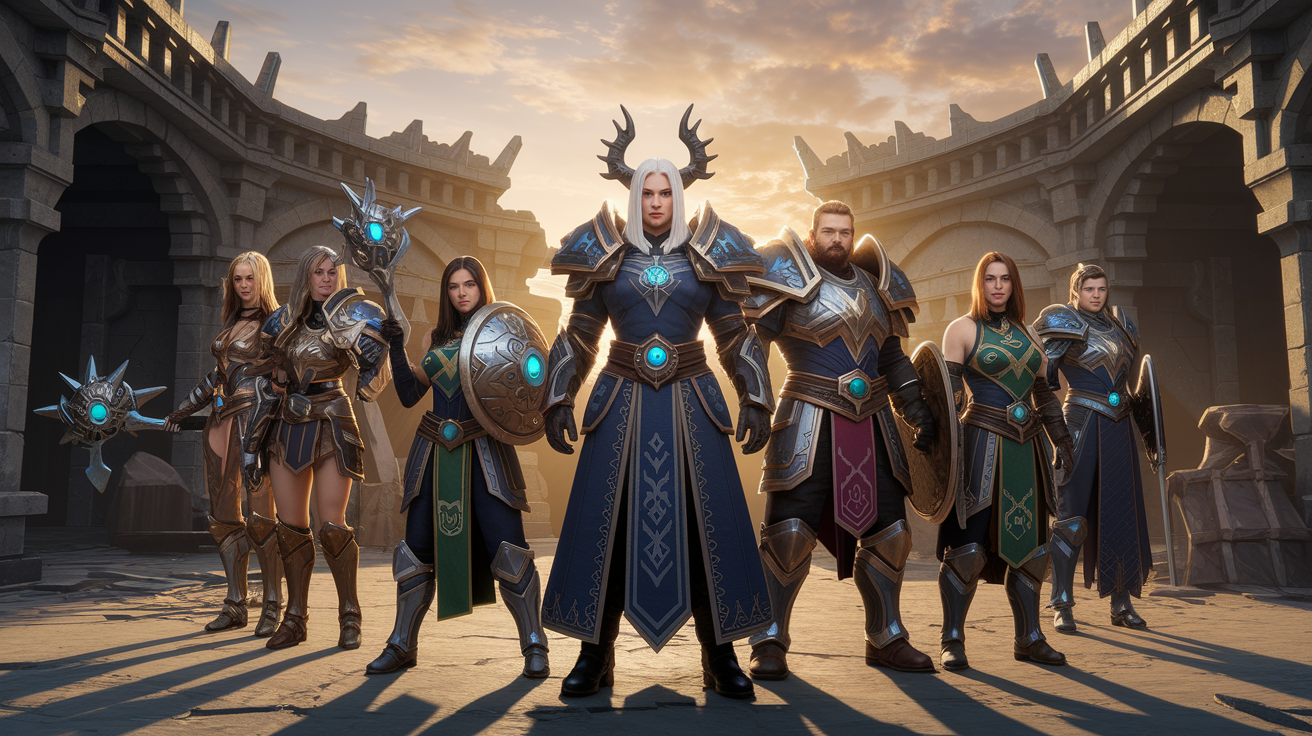
The hybrid kit fills gaps by providing whatever your team lacks. Your allies are two melee fighters? Shift to a caster role and provide ranged pressure, healing, or buffs. Team has two casters? You become the frontline, applying melee pressure to protect your ranged allies and draw enemy attention. Team is balanced? You float between roles, stepping in wherever the fight is tilting against you. This adaptability is why hybrids remain useful even when teammates are uncoordinated or unpredictable.
Adjust your playstyle by reading ally loadouts in the first 20 seconds of a match. See heavy armor and greatshields? Your team doesn’t need another tank. Play mid-range and use spells to set up kills for your frontline. Light armor and staves? Your team is fragile. Equip a shield, stay closer to allies, and use melee to intercept enemies who try to collapse on your casters. See a mix? Default to a balanced stance, using melee when safe and spells when pressured. Don’t commit to one role until you see how the fight develops.
Shift responsibilities mid-match when your initial role stops working. You started as melee pressure but your team’s getting overwhelmed? Fall back and use healing or buff spells to stabilize. Started casting but enemies ignore you to focus your allies? Push forward with melee to split their attention. Team is winning? Don’t switch. Keep doing what works. Only adapt when the current approach is failing. Flexibility doesn’t mean constantly changing. It means recognizing when a change is necessary and executing it without hesitation.
Final Words
When you hit the lobby, lean on the core plan: a balanced stat spread, a medium weapon that scales with spells, and quick‑cast utility to stay relevant. This article covered class choice, stat milestones, weapon and spell picks, and when to swap roles.
Next steps: aim for those 20–25 stat targets early, pick a switchable weapon and low-cost spells, then drill the melee-to-cast flow. If things go wrong, reset to zoning and play safe.
Use this hybrid caster-melee loadout for flexible matchmaking — small practice wins add up fast.
FAQ
Q: What is a hybrid caster‑melee spellblade build and why use it for matchmaking flexibility?
A: A hybrid caster‑melee spellblade build is a character that deals both weapon and spell damage, improving matchmaking flexibility by letting you fill damage, zoning, or frontline roles based on team needs.
Q: Which starting class is best for a hybrid spellblade?
A: The best starting class for hybrids is a balanced starter with even Strength/Dexterity and Intelligence/Faith, so you reach early benchmarks without heavy respecs and switch playstyles quickly.
Q: What are the key stat priorities and early benchmarks for a hybrid build?
A: The key stats for a hybrid spellblade are Intelligence or Faith plus Strength or Dexterity; early benchmarks are roughly 20-25 INT (or FAI) and 20-25 STR (or DEX).
Q: How should I progress stats from early to mid‑game?
A: Progress from early Vigor 20, Endurance 12-15, and primary damage stats at 20, then mid-game push Vigor to 25, Endurance to 20, and one damage stat toward 30.
Q: How do I balance survivability with damage investment?
A: Balance survivability by prioritizing Vigor and Endurance early, keep enough stamina for spell-melee weaving, and avoid splitting damage stats so thin that you die or run out of stamina quickly.
Q: What core gear pieces are required for the baseline hybrid spellblade kit?
A: Core gear: a medium weapon with hybrid scaling, a spell-scaling catalyst, a medium armor set, talismans for stamina and poise, a weapon-buff talisman, and utility consumables for heals or shields.
Q: Which weapons work best with hybrid scaling and melee-spell synergy?
A: Good hybrid weapons include straight swords (fast and versatile), curved swords (smooth weaving), katanas (spacing and bleed), spears (reach), axes (stagger potential), rapiers (crit windows), and infused medium blades.
Q: What spells and abilities should hybrid players use for versatile engagements?
A: Use quick-cast projectiles for pressure, short-range burst spells for trades, weapon buffs to augment melee swings, and utility spells like shields or short teleports for survivability and repositioning.
Q: When should I switch between melee and casting during a match?
A: Switch from melee to casting when stamina is low, opponents kite, or you need zoning; switch back to melee on stagger openings, after a successful buff, or when you can punish recovery frames.
Q: What is a simple combat flow cycle for hybrid matches?
A: A simple hybrid cycle is: cast a quick pressure spell, close to melee for damage, trigger a weapon buff, disengage to cast or recover, then reset spacing and repeat based on stamina and cooldowns.
Q: How does a hybrid build adapt to different team compositions?
A: A hybrid adapts by filling gaps: play frontline if no tank, provide zoning when allies are melee, or offer burst support against squishy comps—communicate and swap talismans or pacing to match team needs.
Q: What common mistake ruins hybrid builds and how do I fix it?
A: The common mistake is over-investing in both damage stats early, leaving low health and stamina; fix it by prioritizing Vigor and Endurance, then commit to one main damage path.