


Most players waste their early skill points, and pay for it with a weak mid-game.
This quick guide gives the best picks for levels 1–20, so you stop limping into Act 2.
Read this if you want clear rules: prioritize survivability, hit weapon-scaling breakpoints, and buy resource skills that multiply value.
I’ll show exact choices for each level band, when to hold points, when to respec, and the common mistakes that cost you the most.
Optimal Early Skill Point Allocation (Levels 1–20)

Getting your skill points right in the first twenty levels keeps you from wasting resources, slowing your progress, and dying to stuff you could’ve avoided. Most games follow the same basic pattern: three attribute points per level, one skill point per level, and choices that start piling up fast. Spread points too thin or grab flashy abilities before you’re ready, and you’ll limp into mid-game with weak damage, paper defenses, and skills that don’t even work with your weapon.
Focus early skill allocation on three things: staying alive, scaling your damage, and using resources better. Skills that boost your health pool, speed up stamina recovery, or improve movement buy you enough time to actually learn what you’re fighting. Damage scaling tied to your weapon’s main attribute means every point you put in translates to faster clears. Resource skills (faster crafting, lower stamina costs) multiply everything else you do.
Priority skill allocation roadmap, levels 1 through 20:
-
Levels 1 to 3: Drop all three skill points into your weapon’s primary scaling attribute. That’s Agility for multi-hit builds, Might for heavy weapons, Luck for crit setups. Use your first attribute points to hit the first weapon-scaling breakpoint, usually somewhere between 15 and 18 in one stat.
-
Levels 4 to 6: Put two points into Vitality or Defense so you can survive early boss burst. Use your leftover skill point to unlock your first real combat ability or passive. Think stamina-cost reduction or a guaranteed crit proc.
-
Levels 7 to 10: Keep scaling your primary damage attribute. By level 10, you should be sitting at 20 to 25 points in your main stat and 8 to 12 in survivability. Unlock mobility or sustain skills that let you kite, dodge, or recover stamina while fighting.
-
Levels 11 to 13: Start putting points into a secondary attribute that supports your weapon’s B or C tier scaling. If you’re running a hybrid weapon, this is where splits like Agility plus Defense or Luck plus Vitality start paying off.
-
Levels 14 to 17: Invest in skill tree unlocks that actually work with your attribute spread. Crit build? Prioritize Luck-scaling passives. Tank support? Unlock abilities that scale off Defense and Vitality.
-
Levels 18 to 20: Fill in the gaps. Throw a few points into whatever stat you’ve been neglecting. Defense if you’re squishy, Agility if you’re slow. Unlock utility skills like faster looting, reduced crafting time, or stealth bonuses if your build can use them.
-
Don’t over-invest in a single attribute past 30 before level 20. Diminishing returns kick in. You’ll give up too much survivability or utility.
-
Don’t unlock advanced skill tree abilities that need 18 or 36 total points in one tree until after level 20. The prerequisites cost way too much this early.
-
Respec once when you pick up your Act 2 weapon. Most Act 2 weapons scale differently than Act 1 stuff. Reallocating 15 to 20 points to match the new weapon’s letter grades will double your damage right away.
-
Keep 2 to 4 unspent skill points in reserve after level 10. Emergency respecs, random weapon drops, build pivots… all easier when you’ve got flexibility.
-
Put one skill point into stamina-maximum increases (something like Youthful Lungs in mobility trees) before level 8. Stamina controls dodging, sprinting, and skill usage. More max stamina means more uptime.
-
Unlock resource-efficiency skills (reduced stamina cost, faster crafting) between levels 12 and 16. These pay for themselves in saved time and consumables over the next 20-plus levels.
This roadmap assumes you’re getting one skill point per level and three attribute points per level. Standard rate in most progression systems. If your game awards points differently, just scale the breakpoints to match: hit your first weapon-scaling threshold around 25 percent of the early curve, diversify by 50 percent, round out by 75 percent.
The reason these picks matter is compounding value. A skill point you drop on stamina cost reduction at level 5 saves you hundreds of stamina units over the next fifteen levels. That translates into more dodges, more sprint escapes, fewer deaths. Attribute points spent matching your weapon’s A-tier scaling at level 8 mean every point after that increases damage by a higher percentage. Early mistakes don’t just cost you one level. They cost you the entire multiplicative gain those points would’ve generated across ten or more levels.
Why These Early Skills Work (Core Mechanics and Synergies)

Early skills gain power through three things: scaling synergy with attributes, prerequisite unlocks for stronger abilities, and resource-efficiency multipliers. Scaling synergy means a skill that grants bonus damage based on your Agility stat gets stronger every time you add Agility points. Investing in both the skill and the attribute creates exponential growth instead of linear. Prerequisite unlocks work by gating high-value abilities behind a minimum investment in a skill tree. If you need 18 points in the Conditioning tree to unlock Loaded Arms (which halves weapon weight), every early point you spend moving toward that threshold is an investment in a future power spike. Resource-efficiency multipliers include skills that reduce stamina costs, speed up crafting, or extend effect durations. A skill that cuts stamina per dodge by 20 percent effectively increases your total dodge budget by 25 percent, and that compounds with max-stamina increases and stamina-regen buffs.
The highest-value early skills combine at least two of these. Marathon Runner (reduced stamina cost for running, climbing, vaulting, and rolling) is efficient because it cuts resource drain and works with every stamina-maximum increase you take later. Youthful Lungs (increases max stamina) is a pure multiplier that makes every stamina-regen and stamina-cost skill more effective. Weapon-attribute alignment (putting points into the stat your weapon scales with) creates scaling synergy: a weapon with A-tier Agility scaling gains more damage per Agility point than a weapon with C-tier scaling. Prioritizing your weapon’s top-grade stat early means you’re getting maximum value from every point you invest.
Synergy chains show up when you stack complementary effects. Take Youthful Lungs (max stamina), Marathon Runner (reduced stamina cost), and Carry the Momentum (sprint sustain after rolls), and you’ve got a mobility loop: more stamina lets you sprint and roll more, reduced cost per action stretches that stamina further, and sprint-after-roll sustain lets you reposition without downtime. Combat builds use the same logic. Stack your weapon’s primary attribute, unlock a crit-chance passive, then add Luck points to scale the crit rate. The combined effect is way bigger than each piece individually.
Alternative Early-Game Builds for Different Playstyles

Not everyone wants to optimize damage or rush the same skill tree. Early builds branch into offensive (maximum damage and clear speed), defensive (survivability and sustain), and balanced (utility and flexibility) paths. Each path uses the same pool of attribute and skill points but prioritizes different breakpoints and unlocks. All three paths work through level 20. The differences show up in how fast you kill versus how often you die versus how smoothly you handle non-combat stuff.
Offensive Build Path
Offense builds max weapon damage and attack frequency by stacking the weapon’s primary scaling attribute and unlocking damage-amplification skills early. For Agility-scaling multi-hit weapons, put 25-plus points into Agility by level 12, invest skill points into crit-chance passives and attack-speed buffs, and add Luck as a secondary stat starting at level 14 to boost crit consistency. For Might-scaling heavy weapons, prioritize Might to 28 or 30 by level 15, unlock charge-attack damage bonuses, and only add Vitality when you start dying in two hits. Offensive builds respec at the Act 2 weapon swap to move points from the old weapon’s scaling stats to the new weapon’s top-tier attributes. This path clears content fastest but you need near-perfect dodging and fight knowledge to survive.
Defensive/Survivability Build Path
Survivability builds split early points between Vitality (health pool), Defense (damage reduction and some weapon scaling), and stamina-sustain skills to outlast enemies through attrition. Invest 15 to 18 points into Vitality by level 10, then alternate between Defense and your weapon’s secondary scaling stat (often Agility or Defense itself) through level 20. Prioritize skill unlocks that restore health, extend bleed-out timers, or give you damage reduction while knocked down. Unlock In-Round Crafting early (around level 8 to 10) so you can craft bandages mid-fight. Take Broad Shoulders to carry extra healing supplies. This path sacrifices clear speed but cuts down on full wipes and lets you learn boss patterns without restarting from checkpoint.
Balanced/Utility Hybrid Path
Balanced builds invest moderately across attributes and prioritize utility skills that improve looting, crafting, movement, and exploration. Put 12 to 15 points into your weapon’s primary attribute by level 10 (enough to hit the first scaling threshold), then spread remaining points evenly across Vitality, Agility, and Luck. Focus skill points on Mobility tree essentials (16 to 17 points total by level 17) to unlock Marathon Runner, Youthful Lungs, and Carry the Momentum. Then shift into Survival skills like In-Round Crafting, Looter’s Instinct, and Looter’s Luck. This path is slower in combat than pure offense but faster in exploration and resource gathering, making it solid for completionists and players who want self-sufficiency without relying on perfect mechanical execution.
| Build Type | Key Early Skills | Strengths |
|---|---|---|
| Offensive Build Path | Primary weapon attribute 25+, crit passives, attack-speed buffs, Luck secondary at 14+ | Fastest clears, highest single-target damage, quick boss kills; fragile if you miss dodges |
| Defensive/Survivability Build Path | Vitality 15 to 18, Defense scaling, In-Round Crafting, bleed-out extensions, Broad Shoulders | Survives learning phases, low wipe rate, self-sufficient healing; slower damage output |
| Balanced/Utility Hybrid Path | Mobility 16 to 17 points, In-Round Crafting, Looter’s Instinct, even attribute spread | Exploration speed, loot efficiency, stamina sustain; moderate damage and survivability |
Common Early-Game Skill Allocation Mistakes

Most wasted skill points come from chasing high-cost unlocks too early, ignoring survivability until it’s too late, or spreading points across too many low-synergy skills. Catching these mistakes before you commit points saves you a respec and hours of frustration.
Top early allocation errors:
Over-investing in a single attribute past 30 before level 15. Diminishing returns mean the difference between 30 and 35 in one stat is smaller than splitting those five points across two stats. You also create exploitable weaknesses. Enemies that target your low Defense or Vitality will punish single-stat stacking.
Chasing 36-point skill tree unlocks before level 20. Skills like Vault Spring or Security Breach require huge point investments that leave you with zero flexibility. You’ll have advanced mobility but no damage, or advanced looting but no survivability.
Ignoring Vitality and Defense until you start dying in one hit. By the time you realize you need survivability, you’ve already lost progress to avoidable deaths. Put at least 8 to 12 points into health or defense by level 10.
Unlocking niche or situational skills early. Skills like Minesweeper (limited by proximity-fuse mines), Back On Your Feet (triggers at 5 percent health for 15 seconds), or Sky-Clearing Swing (only useful against specific flying enemies) cost points without delivering consistent value.
Not reallocating attributes after a weapon swap. When you upgrade from an Agility-scaling weapon to a Defense-scaling weapon in Act 2, continuing to pump Agility wastes every new point. Respec immediately to shift old Agility into Defense.
Spreading skill points thin across multiple trees without hitting breakpoints. Investing 8 points in Mobility, 6 in Survival, and 4 in Conditioning leaves you with no meaningful unlocks. Commit to one tree first (Mobility to 16 or 17) before branching.
Delaying essential utility unlocks like In-Round Crafting. Waiting until level 18 to unlock on-map crafting means you’ve already missed hundreds of potential bandages and shield chargers. Take it by level 10.
The fix is simple: plan your next ten levels before spending any points. Figure out which breakpoint you’re building toward (a weapon-attribute threshold, a skill tree unlock, or a survivability minimum), put points into reaching that breakpoint as efficiently as possible, and don’t spend on anything else until you hit it. If you’re unsure, default to the Mobility-first build (16 to 17 points in Mobility by level 17) because movement and stamina sustain help every playstyle. The investment pays off even if you respec later.
Respec Options and When to Rebuild Your Skills
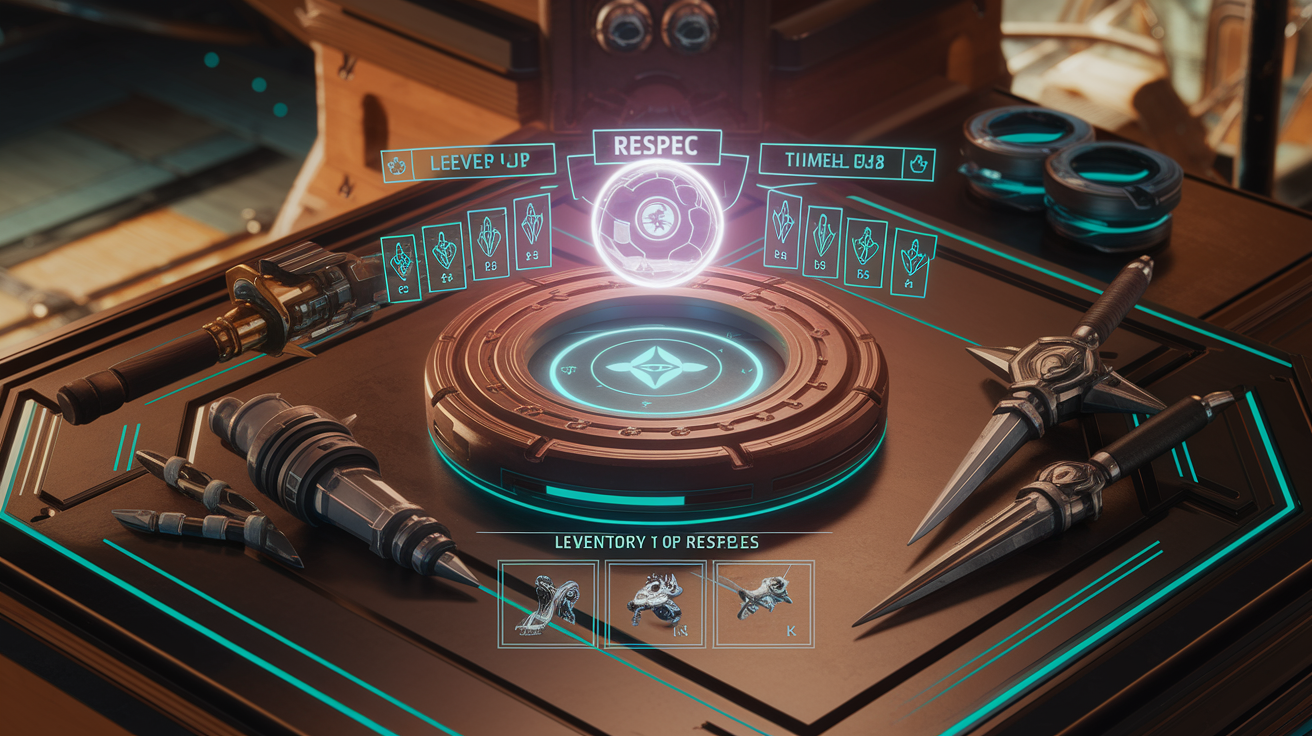
Most games let you respec through consumable items, NPC interactions, or in-game currency, but the cost and availability change depending on the game. Early respecs are cheaper and more valuable than late ones because you’re fixing small inefficiencies before they compound across dozens of levels. Knowing when to respec turns a mediocre build into an optimized one without restarting your character.
Good moments to respec in the early game:
Right after picking up a new weapon with different attribute scaling. If your Act 1 weapon scaled with Agility and Luck, but your Act 2 weapon scales with Defense and Agility, respec to move Luck points into Defense. This usually happens around level 12 to 16.
When you’ve committed 10-plus points to a skill tree and it doesn’t match your playstyle. If you invested heavily in Conditioning for PvP combat but you’re only playing PvE, respec those points into Mobility and Survival for better exploration and looting.
Before a difficult boss or content spike. If you’re stuck on a fight and your current build isn’t working, a respec lets you test a tankier setup, a higher-damage setup, or a utility-focused setup without grinding new levels.
After unlocking a high-value skill that changes your build requirements. For example, if you unlock Loaded Arms (halves weapon weight) at 18 Conditioning points, you might respec to drop carry-weight passives and put those points into damage.
When you’ve got unspent points sitting idle for more than five levels. Hoarding points reduces your effective power. If you’re not sure where to spend them, respec to consolidate your build and commit to a clear path.
Respec timing matters because early mistakes are easy to fix and the cost (usually one consumable item or a small amount of currency) is tiny compared to the efficiency gain. Wait too long and you’ll carry inefficient allocations through the entire mid-game. Best respec strategy is to plan one respec per major weapon upgrade and keep a respec item in reserve for emergencies or build experiments.
Final Words
in the action, we walked through a level-by-level 1–20 roadmap. We covered the synergies behind picks, alternative builds, common mistakes, and respec timing.
Quick rule: prioritize core damage, then survivability, then utility. Follow the numbered list early, then shift if your lobby needs crowd control or sustain.
Treat this [game] early skill point allocation guide as your baseline. Start with the priorities, adapt when a patch or lobby forces it, and you’ll hit stronger power spikes faster.
FAQ
Q: What is the best early skill allocation from levels 1–20?
A: The best early skill allocation from levels 1–20 focuses on core damage first, one survivability point, resource or cooldown utility, then situational talents—build foundation skills to level 3 before branching out by level 12.
Q: Which skills should I prioritize first and why?
A: You should prioritize foundational damage, a defensive or mobility skill, and resource utility because they increase clear speed, reduce deaths, and sustain fights—those three give the biggest early progression payoff.
Q: Can you give a level-by-level point roadmap for levels 1–20?
A: A practical roadmap: 1–3: core damage; 4: survivability; 5–7: finish main damage; 8–10: resource/cooldown; 11–14: secondary utility; 15–20: situational upgrades and capstones for scaling.
Q: Why do these early skills work — what are the core mechanics and synergies?
A: These early skills work because damage skills scale with basic stats, survivability reduces costly deaths, and resource/cooldown choices enable more uptime—together they unlock stronger later combos and smoother power curves.
Q: What alternative early builds suit different playstyles?
A: Alternative early builds include offensive (max damage and burst), defensive (extra health, shields, sustain), and hybrid utility (mix of damage, mobility, and support), each tuned to solo or team priorities and risk tolerance.
Q: What common early-game skill allocation mistakes should I avoid?
A: Common mistakes include overspending on weak niche skills, ignoring survivability, spreading points too thin across trees, and delaying core skills—these slow progression and increase costly respecs.
Q: When should I respec my early skills?
A: You should respec when you unlock key gear that changes scaling, after a major patch, if you frequently die or can’t clear, or when joining a coordinated team that needs different roles.
Q: How many points should I dump into one skill versus spreading across skills?
A: You should concentrate points into your primary skill until it hits its early breakpoint (usually level 3–5), then invest remaining points into a defensive and one utility skill for balanced efficiency.
Q: How do I adapt early allocation for solo versus team play?
A: You should favor self-sustain and mobility for solo play, and lean into team-oriented utility or damage when grouped—pick the role that covers your lobby’s weakest link, not just your preference.
Q: What should I do if my early build falls behind?
A: You should immediately shore up survivability, prioritize safe clear tools, consider a low-cost respec to correct core priorities, and farm low-risk content until your damage and resources catch up.