


Think support is a passive role? Think again.
This patch rewards fast level two wins, smart vision, and picking the right archetype for your ADC.
Read this guide for simple, repeatable rules to hit those power spikes, control objectives, and tilt games in your favor.
You’ll get clear next steps, where to ward, when to trade, who to pick, and the why behind each decision.
If you want steady climb from Silver to Platinum or beyond, start playing early, not late.
Current Meta Overview for Support Players

Support right now is all about those first four minutes and how fast you can hit your level 2 spike. Enchanters like Sona, Milio, and Lulu are crushing it because they scale hard into mid game while keeping your carries alive. Tank supports like Braum and Leona? Still strong in Platinum and up, especially when your ADC knows how to follow up on early fights. Thresh keeps rewarding players who can land hooks and set up picks with their jungler.
This patch loves supports who can proc the new item effects fast and turn small leads into real objective pressure. Braum’s sitting at 53.0% win rate mostly because Bandlepipes works perfectly with his passive and his natural tankiness. Sona’s leading at 53.8%, climbing efficiently in solo queue since her healing and poke need almost zero coordination and just punish messy enemy teams. Milio’s W buff (that extra auto range for your ADC) makes him work with any hypercarry, and his ult cleanses hard CC, shutting down popular engage champs like Leona or Nautilus.
Rune setups shifted toward staying alive and controlling tempo. Guardian and Aery dominate enchanter builds. Aftershock is still the go-to for engage tanks. Secondary trees now prioritize biscuits and cosmic insight for enchanters trying to survive poke lanes, while tanks take bone plating plus unflinching when facing CC and burst. Builds focus on hitting first item breakpoints fast. Enchanters rush Moonstone or Shurelya’s to amp healing and movement in skirmishes. Tanks prioritize tanky support items that let them dive early and give stats for longer trades.
Current priority picks and archetypes:
- Sona – Highest win rate, easy to execute, scales late with minimal risk
- Braum – Strong into tanks and utility supports, good item synergy this patch
- Milio – Pairs with top tier ADCs, extends carry range, strong cleanse ult
- Thresh – High playmaking ceiling, punishes positioning mistakes and bad Flash usage
- Leona – Aggressive level 1 and 2 all-ins, forces early Flash or kills in melee matchups
- Lulu – Buffs hypercarries, simple kit, shuts down divers like Rengar and Lee Sin
Core Fundamentals for Ranking Up as Support

Vision control separates you from lower elo supports faster than anything else. Place your first ward in river bush or tri-brush before 1:30 to spot enemy jungle pathing and stop early ganks. Control wards go in pixel brush or river alcove depending on which side has pressure. If your lane’s pushed and you have priority, drop the control ward deep to deny enemy jungle vision. Getting shoved in? Keep it close to your turret to protect from dives and ganks. Replace control wards every time the enemy clears one. Yeah, it costs 75 gold, but the denial and safety are worth more than one cannon minion.
Trading patterns decide who controls the wave and who gets to roam first. Auto the enemy ADC or support whenever they walk up for CS, especially if your ADC’s also in range to follow. Most supports lose trades because they don’t respect ability cooldowns. Enemy Thresh misses hook? You’ve got a 12 second window to punish him with autos and abilities while he can’t threaten all-in. Enchanters should auto between abilities to maximize poke. Tanks should hold key engage cooldowns until the enemy uses their escape or gets caught in a bad spot near your wave.
Roaming works when the wave’s shoved into enemy turret and your ADC is safe or based. Walk to mid after you crash wave at level 3 or 4, especially if enemy mid is pushed past river. Coordinate with your jungler for scuttle fights or invades after shoving bot. If you roam and nothing happens, get back before the wave crashes and your ADC gets dove. Bad roams lose more than they win. Only roam when you see a clear play or when staying in lane gives you nothing because your ADC is gone or the wave’s frozen on enemy side.
Key fundamentals checklist:
- Ward river or tri-brush before 1:30 to spot jungle
- Replace control wards immediately after enemy clears them
- Punish enemy cooldowns with trades and autos
- Roam only when wave is shoved and ADC is safe
Champion-Specific Playstyles and Role Mastery
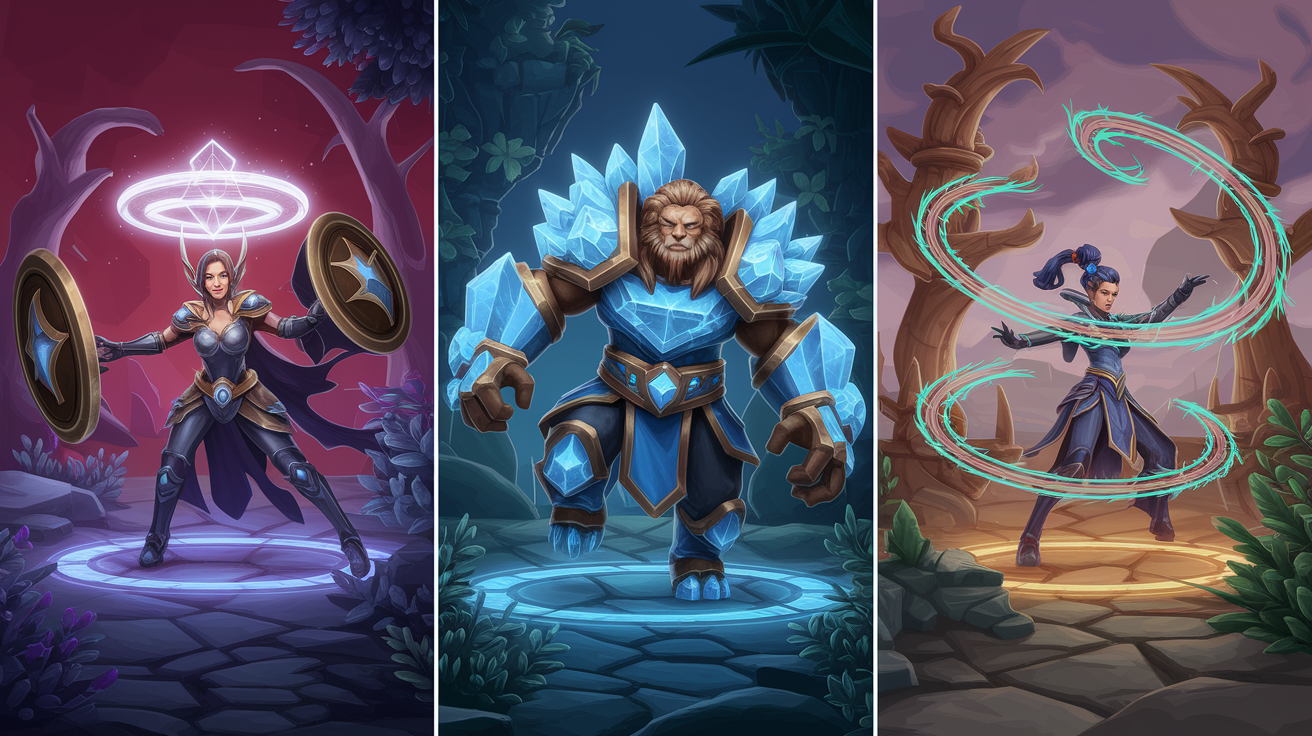
Each support archetype has a different win condition and different points where they take over. Enchanters scale with items and levels, building power as the game drags on. Engage tanks dominate early through level advantages and all-in threat. Poke mages control lane by making it unsafe to walk up for CS or trades. Knowing when your champion is strongest and how to convert that strength into objectives or kills separates supports who climb from supports who just play the role.
Enchanters rely on protecting their carry and extending fights long enough for sustained damage to win. You’re not looking for the perfect engage. You’re looking to neutralize enemy engage and keep your team healthy during extended skirmishes. Save your big cooldowns like Lulu ult or Milio cleanse for when the enemy commits their engage. Don’t waste them early in a poke war. Enchanters lose when they get caught alone or when they use their peel tools too early and have nothing left when the real damage comes in.
Engage supports force the pace by creating all-in windows the enemy can’t ignore. Leona and Thresh win by landing one good ability at the right time, either in lane to blow summoners or near an objective to start a 5v4. Engage champs fall off if you don’t convert early leads into objective control and vision denial. If you’re 0-0-2 at 15 minutes on Leona, you’re not doing your job. You should’ve forced at least one kill, one Flash, or one major wave crash that let your jungler take dragon.
Enchanter Playstyle
Enchanters thrive by keeping their ADC healthy and buffing their damage in extended trades. Use your shield or heal when the enemy commits to an all-in, not when they poke once. If you blow Lulu’s E just because the ADC took one auto, you won’t have it when the real engage happens. Position behind your ADC in teamfights and keep your mouse hovering over them so you can instantly shield or buff when the assassin dives. Your job is to make the enemy regret focusing your carry, not to make plays on your own.
Sustain pressure is how enchanters win lane. Auto the enemy every time they step up, then heal or shield the return trade. Playing Sona? Your Q auto combo out-trades almost any support pre-6 as long as you’re not tanking the full minion wave. Enchanters also control vision better than other supports because they don’t need to commit their body to make plays. Place deep wards while your ADC is safe under turret and roam to place vision around upcoming objectives when the lane is shoved.
Empowerment windows are your power spikes. Lulu’s W and E make any ADC stronger in trades, so ping when you have both up and when the enemy wastes a key cooldown. Milio’s W extends auto range, which means your ADC can kite and trade from positions that would normally be unsafe. Time your buffs around your ADC’s all-in or the enemy’s engage, whichever comes first.
Engage/Tank Playstyle
Engage supports win by forcing the enemy into bad fights at bad times. Best all-in windows are level 2 when you hit it first, level 3 when you have all base abilities, and level 6 when your ult is up. Track minion XP and tell your ADC when you’re about to hit level 2 so you can engage the instant it happens. Enemy hits 2 first? Back off and wait for your window. Forcing a bad engage while down a level is how tanks int lane.
Cooldown tracking is everything. Thresh misses hook? You have 12 seconds. Leona uses E? She can’t engage again for 10 seconds. Write enemy Flash timers in chat and ping your jungler when enemy support or ADC has no escape. Engage champs create leads by punishing mistakes, not by randomly running at the enemy and hoping it works. Look for moments when enemy ADC walks too far forward to CS or when enemy support steps up alone to ward.
Objective forcing is your mid game job. Once lane ends, your goal is to set up vision, deny enemy vision, and create picks around Dragon and Baron. Use sweeper to clear enemy wards before your team starts the objective, then stand between the objective and enemy jungle to block their approach. Land one good ult in the river before Dragon spawns? Your team takes it for free. Miss? Reset and wait for the next window.
Poke/Mage Playstyle
Poke supports dominate lane by making it painful to walk up for CS or trades. Champs like Zyra, Brand, or Xerath win by landing repeated abilities that chunk enemy ADC or support down to 50% HP, forcing them to base or play so far back they lose XP. Your goal is to build an HP advantage, then threaten all-in or force them off the wave entirely. Poke works best into melee supports who can’t retaliate from range and into low sustain ADCs who have no way to heal back up.
Zone control comes from ability placement and positioning. Drop your abilities where the enemy has to walk, not where they’re standing right now. Playing Zyra? Put plants in the brush and on the wave so the enemy has to choose between taking CS or taking damage. Stand in positions that make it unsafe for the enemy to walk forward without eating your full combo. Poke champs lose when they miss abilities on cooldown and give the enemy free windows to engage or trade back.
Mid game influence is where mage supports take over. Your damage is high enough to threaten squishies in one rotation, and your cooldowns are short enough to spam abilities during objective fights. Build Liandry’s or Luden’s to amp your damage, then rotate to objectives early and poke the enemy team before the fight even starts. Land one good combo on their ADC or mid laner during setup? Your team wins the 5v5 before it begins. Mage supports fall off late if you don’t convert your mid game damage into objective control, so prioritize vision and picks around Dragon and Baron.
Laning Phase Matchup Strategy
Winning or losing lane gets decided in champion select and the first three levels. Melee engage supports beat enchanters in all-ins but lose to poke and kiting. Enchanters beat poke mages in sustain wars but die to hard engage if they get caught. Poke mages beat melee tanks by preventing them from ever getting in range, but lose to enchanters who outheal the poke and outscale. Pick Leona into Zyra and Caitlyn? You’re going to eat free harass for 10 minutes unless your jungler camps the lane.
Priority lanes are matchups where you naturally win trades and can shove the wave to rotate first. Playing Sona into Nautilus and Kai’Sa? You have priority because you can poke them down and sustain back up, and Nautilus can’t all-in without hitting a hook. Priority lets you roam, ward deep, and contest scuttle with your jungler. Losing lanes are matchups where the enemy can kill you or shove you under turret. If you’re losing, your job is to survive, soak XP, and wait for jungle help or for the lane to end so you can impact the map elsewhere.
Adaptation is how you survive bad matchups. Enchanter into hard engage? Stand far back and only walk up to shield or heal when your ADC trades. Tank into poke? Let the wave push to you, then look for an all-in when the enemy’s overextended. Poke into sustain? Focus the ADC instead of the support because killing the support won’t stop the ADC from farming. Save your big cooldowns for when the enemy makes a mistake. Don’t blow them just because they’re up.
Matchup principles to climb faster:
- Melee beats enchanter in all-ins, loses to poke and range
- Enchanter beats poke through sustain, loses to hard engage
- Poke beats melee by denying engage range, loses to sustain
- Play for priority in winning matchups, play for survival in losing ones
- Save key cooldowns for mistakes, don’t force plays into losing matchups
Optimal Support Itemization in the Current Patch

First item timing is your biggest power spike and decides whether you can impact the next Dragon fight or roam. Enchanters rush Moonstone Renewer if the game’s going to be scrappy and full of small skirmishes, or Shurelya’s Battlesong if your team needs engage speed and movement to close gaps. Tanks buy Solstice or Radiant Virtue to survive longer in fights and provide more CC uptime. Mage supports skip support items entirely and rush Liandry’s or Luden’s to maximize damage in mid game. Finish your support quest by 12 minutes so you can upgrade to full wards and start denying enemy vision with sweeper.
Situational buys separate good item builders from players who follow the same build every game. Enemy has three AP champs? Buy Mikael’s Blessing second on enchanters for the magic resist and cleanse active. Your ADC is giga fed? Buy Ardent Censer or Staff of Flowing Water to amp their damage even more. Enemy has multiple divers or assassins? Buy Zhonya’s on mage supports or stack armor on tank supports so you survive long enough to land your CC. Don’t finish boots until after first item unless you desperately need the movement to dodge skill shots or roam faster.
Adaptive itemization wins games. Enemy ADC is 5-0 and your ADC is 0-3? Stop building to buff your ADC and start building to survive and peel for your fed mid laner or top laner instead. Your team has no front line? Buy tankier items even on enchanters so you don’t get one shot in the first three seconds of the fight. Enemy has heavy CC and your carries keep getting locked down? Rush Mikael’s no matter what your standard build says.
| Item | When to Buy |
|---|---|
| Moonstone Renewer | Enchanters in long skirmish-heavy games with sustained teamfights |
| Shurelya’s Battlesong | When your team needs speed to engage or disengage, or to enable picks |
| Mikael’s Blessing | Enemy has point-and-click CC or heavy magic damage, need cleanse for carry |
| Zhonya’s Hourglass | Mage supports facing divers or assassins, need stasis to survive focus |
| Ardent Censer | Your ADC or another auto-attack carry is fed and you want to amplify their DPS |
Synergy With ADCs and Bot Lane Dynamics

Champion synergy determines whether you can pressure early or whether you have to scale and survive. Leona and Nautilus pair best with ADCs who have early burst and CC follow-up like Tristana, Lucian, or Draven. Sona and Lulu pair with hypercarries like Kog’Maw, Jinx, or Vayne because those ADCs need time to scale and enchanters keep them alive long enough to hit their item breakpoints. Thresh and Milio are flex picks that work with almost any ADC because they provide both engage and disengage depending on what the situation needs.
Trading coordination is how you win 2v2s. Ping your engage or your buff cooldown so your ADC knows when to follow. Land Thresh hook and your ADC is farming the back line instead of autoing the hooked target? The hook is wasted. Shield your ADC with Lulu E and they back off instead of trading? You lose the window. Good ADCs will follow your plays, but in solo queue you have to communicate with pings and make your intentions obvious. Walk forward when you want to trade, walk back when you want to reset.
Wave control synergy wins or loses lane. Your ADC is slowpushing and you’re standing in the enemy’s face trying to poke? You’re going to eat a full minion wave of damage and lose the trade. Your ADC is trying to freeze and you’re randomly autoing the wave? You’re going to break the freeze and get them killed when the wave crashes and enemy jungler shows up. Match your ADC’s wave plan. They’re shoving? Help shove. They’re freezing? Stand between the enemy and the wave to deny CS without touching minions.
Synergy rules that win more games:
- Pair engage supports with burst ADCs, enchanters with hypercarries
- Ping your cooldowns and your engage windows so your ADC can follow
- Match your ADC’s wave control, don’t randomly break freezes or slowpushes
Macro Play and Mid-to-Late Game Decision-Making

Support macro is about map presence and forcing the enemy team to make bad choices. After laning phase ends, your job is to set up vision 60 to 90 seconds before the next objective spawns, deny enemy vision with sweeper, and position your team to take the objective safely or force a fight if the enemy contests. Dragon spawns at 10:00? Your control ward and your team’s wards should be in river, in enemy jungle, and near the objective pit by 9:00. Enemy tries to walk in and contest? Your team sees them first and gets the better engage.
Rotations are how you convert leads into more leads. Your bot turret falls? Rotate mid with your ADC to pressure mid turret and open up the map. Top is pushing alone and the enemy’s sending three people to stop him? Rotate bot or take Dragon while the enemy is distracted. Support players who sit bot lane and keep farming after turret falls are wasting time. Move to where the next play is, drop vision on the way, and be ready to peel or engage when your team needs it.
Vision networks extend your team’s safety and your ability to make picks. Deep wards in enemy jungle let your team see rotations before they happen. See enemy support walking toward Baron and your team is near it? You can collapse and kill them before the fight even starts. Control wards in river and in jungle crossroads deny the enemy the same information. Enemy has no vision? They can’t facecheck safely, and every facecheck is a potential pick for your team.
Objective setups are won by the team that controls vision and forces the enemy to facecheck into the unknown. Use your sweeper to clear the area around Dragon or Baron 30 seconds before your team wants to start it. Stand in choke points between the objective and enemy jungle so you can CC anyone who walks in. Your team gets the pick? Start the objective. Enemy doesn’t contest? Start it anyway and force them to respond. Worst thing you can do is sit around the objective doing nothing while the enemy sets up their own vision and engages on you.
Mid-to-late game priorities:
- Vision setup 60 to 90 seconds before objectives spawn
- Rotate with your team, don’t stay in a dead lane after turret falls
- Use sweeper to deny enemy vision before major plays
- Position in choke points to catch enemies who facecheck into objectives
Adapting to Patch Changes and Long-Term Climbing Strategy

Patch notes change what’s strong, but the fundamentals stay the same. When a support champ gets buffed, the pick rate spikes for two weeks and then stabilizes once players realize the champ still has the same weaknesses. When an item gets nerfed, look for the alternative that does the same job with slightly worse stats. Moonstone gets nerfed? Shurelya’s becomes the default. The playstyle doesn’t change that much. Read patch notes for support changes, item changes, and changes to popular ADC or jungle champs because those affect your lane and your mid game more than top or mid changes.
Champion pool management is about having two to three champs you can pick in any meta. One enchanter, one tank, and one flex pick covers almost every team comp and matchup. Meta shifts toward tank supports? Spam your tank pick for two weeks and climb fast while everyone else is still learning the new build. Enchanters get buffed? Rotate back to your enchanter and ride the win rate spike. Don’t one-trick unless you’re willing to dodge bad matchups, because some patches will make your champ unplayable into the meta picks.
Long-term improvement is about fixing one mistake per week and tracking your deaths. Dying more than four times per game on average? You’re overcommitting to bad plays or facechecking without vision. Kill participation below 60%? You’re not rotating to fights or you’re sitting in lane while your team is taking objectives. Vision score below 1.5 per minute? You’re not warding enough or you’re warding in bad spots that get cleared instantly. Pick one stat, focus on it for a week, and watch your rank go up when that one thing improves.
Maintaining a Flexible Champion Pool
Build a pool of two to four supports that cover different team needs and adapt quickly when the meta shifts. Engage tanks are strong? Have Leona or Thresh ready. Enchanters dominate? Play Sona or Lulu. Always have one safe blind pick you can first-pick without getting hard countered. Thresh and Milio both work because they provide engage and disengage depending on how you use your kit. When a balance patch drops, check win rates for your champs in your elo, not in pro play, because solo queue and competitive have completely different metas.
Avoid one-tricking outdated or nerfed champs unless you’re ready to dodge every bad matchup. Your main gets nerfed and drops to a 48% win rate? Time to rotate to your secondary pick until the next round of buffs. Don’t waste LP trying to force a weak champ to work when there are three other supports in your pool that do the same job better. Meta shifts happen every two weeks with hotfixes and every two months with major patches, so staying flexible is faster than waiting for your champ to get buffed back into the meta.
Final Words
In the action: pick a couple of current meta supports, hit your power spikes, and play around wards and roams.
This guide covered the support meta, laning fundamentals, champion playstyles, matchup plans, itemization, bot lane synergy, and macro decisions. Use the step by step sections to practice ward timings, trading windows, and mid game rotations.
Start with one champion, use the adaptation tips after patches, and focus on small wins. This plan shows how to climb as League of Legends support in the current meta and stay positive about progress.
FAQ
Q: Can you climb as support in LoL?
A: You can climb as support in LoL by focusing on vision control, roams, lane priority, and objective setups. Strong macro play and consistent peel/engage swing games and outvalue enemy mistakes.
Q: Is ADC the hardest role to climb?
A: ADC is often one of the harder roles to climb because it demands consistent mechanics, wave and item timing, and heavy dependence on support and team positioning; small mistakes cost games.
Q: How to actually climb in League of Legends?
A: To actually climb in League of Legends, master a small champion pool, fix one mechanical or macro habit, prioritize objectives and vision, review replays, and adapt builds to the patch.
Q: Do climbers need support to climb?
A: Climbers don’t strictly need a dedicated support, but supportive teammates speed climbing. A reliable support speeds vision, engages, and shotcalling, yet strong solo play and macro can still carry games alone.